
Last updated November 23, 2026
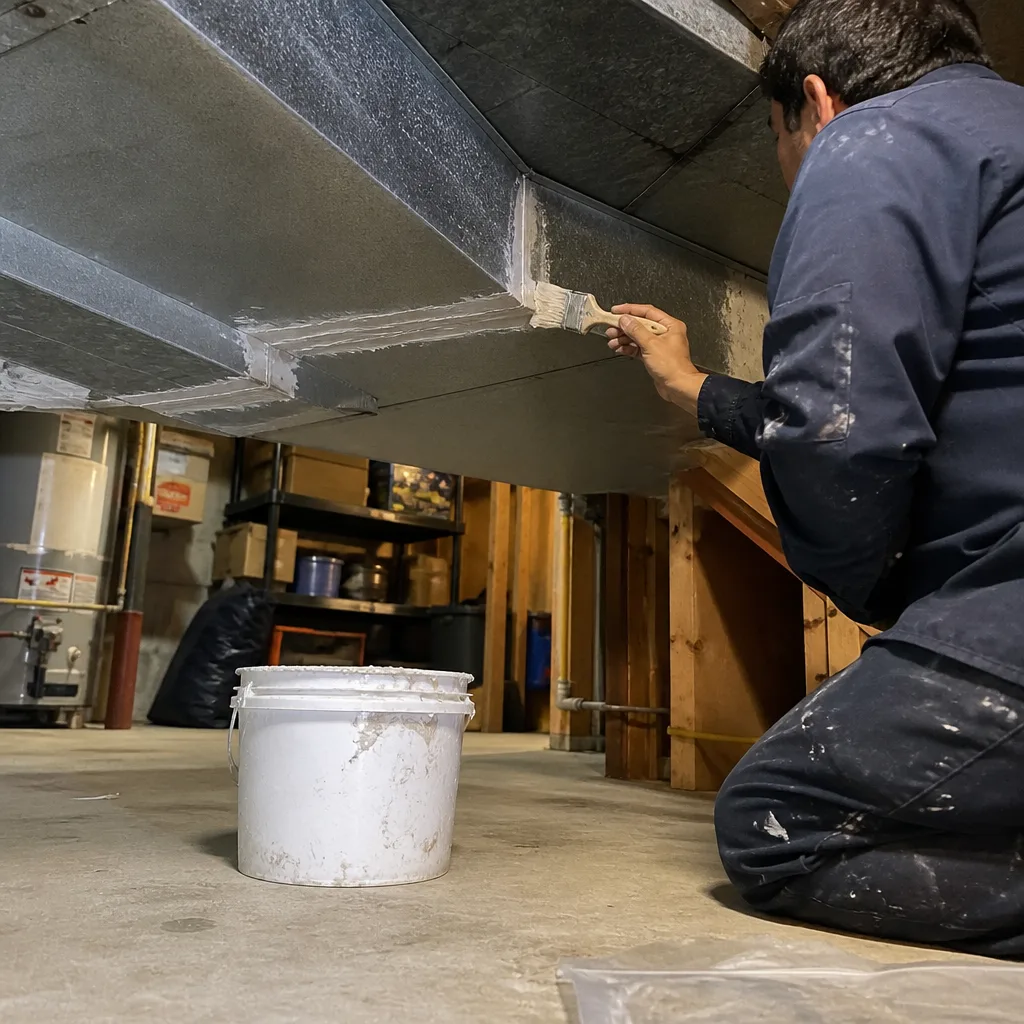
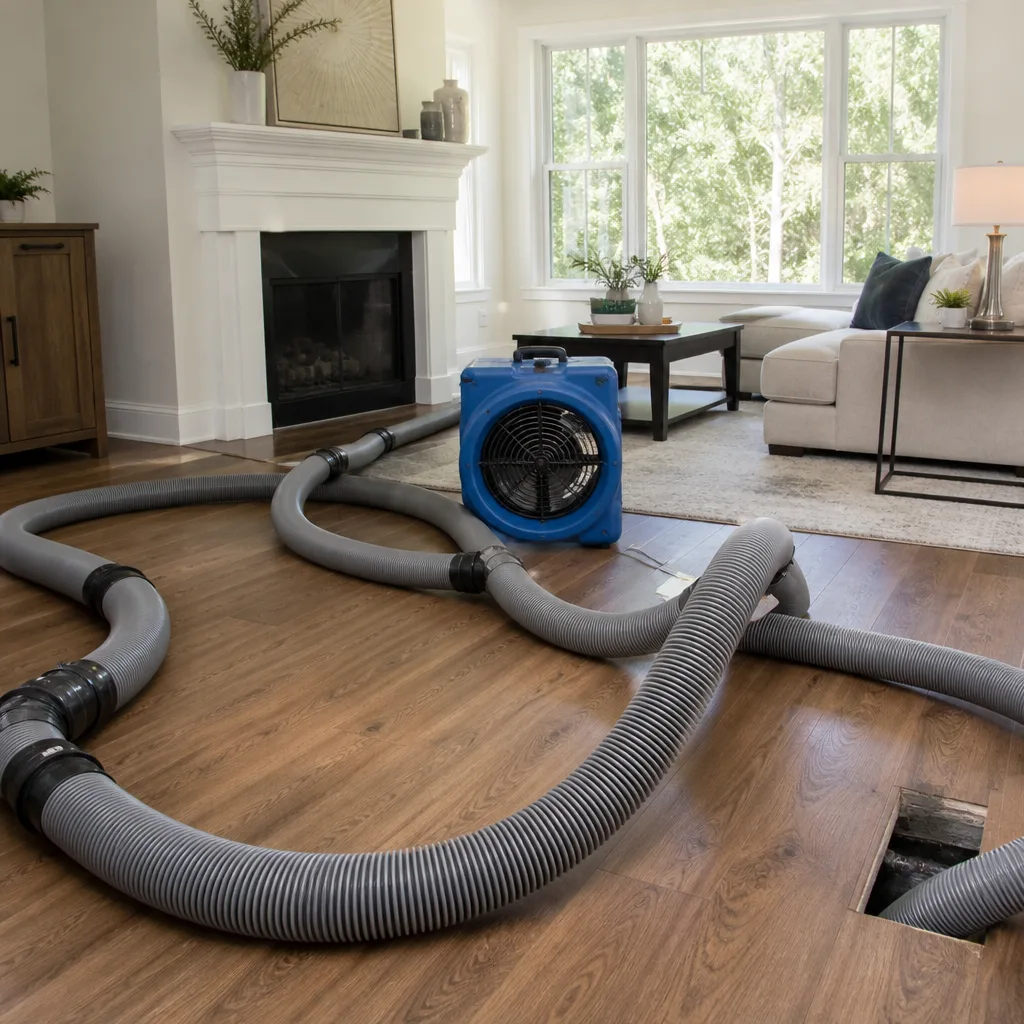 Whole-home duct cleaning
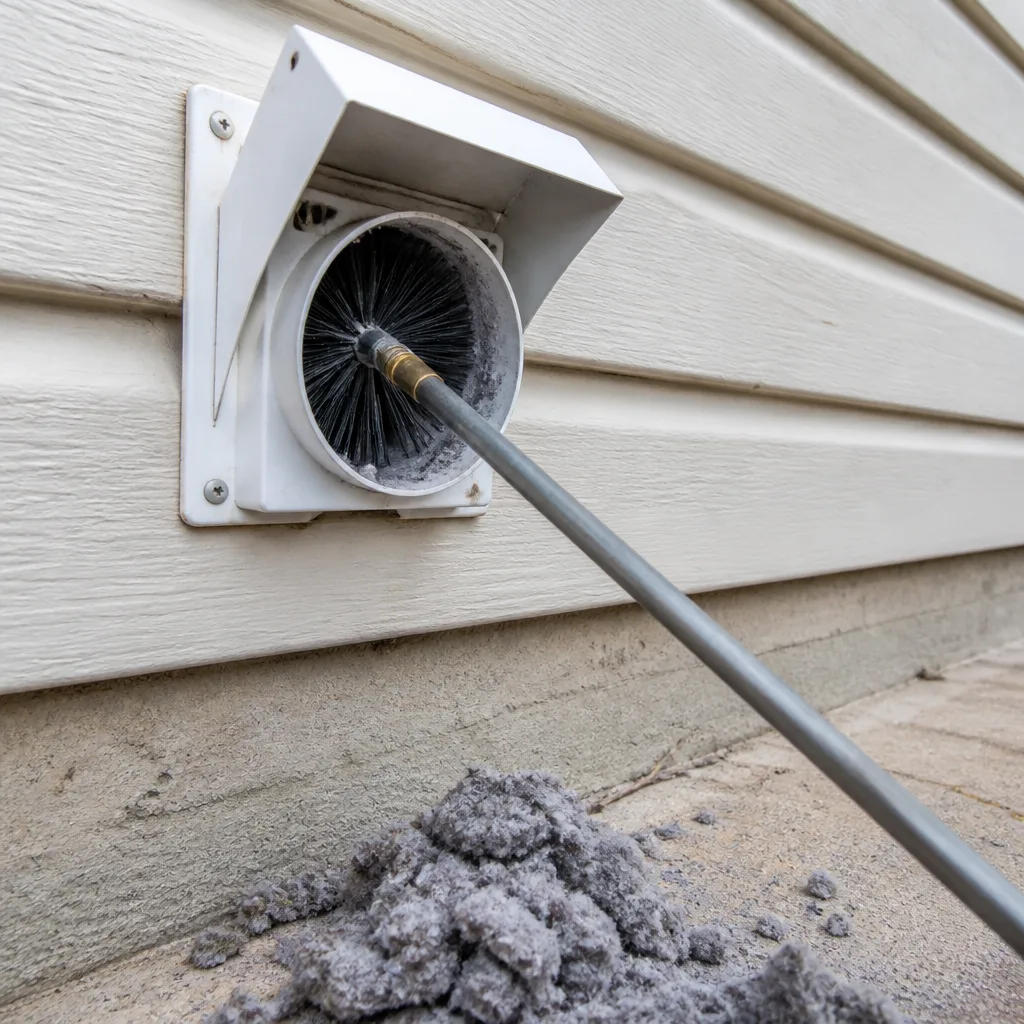 Dryer vent cleaning
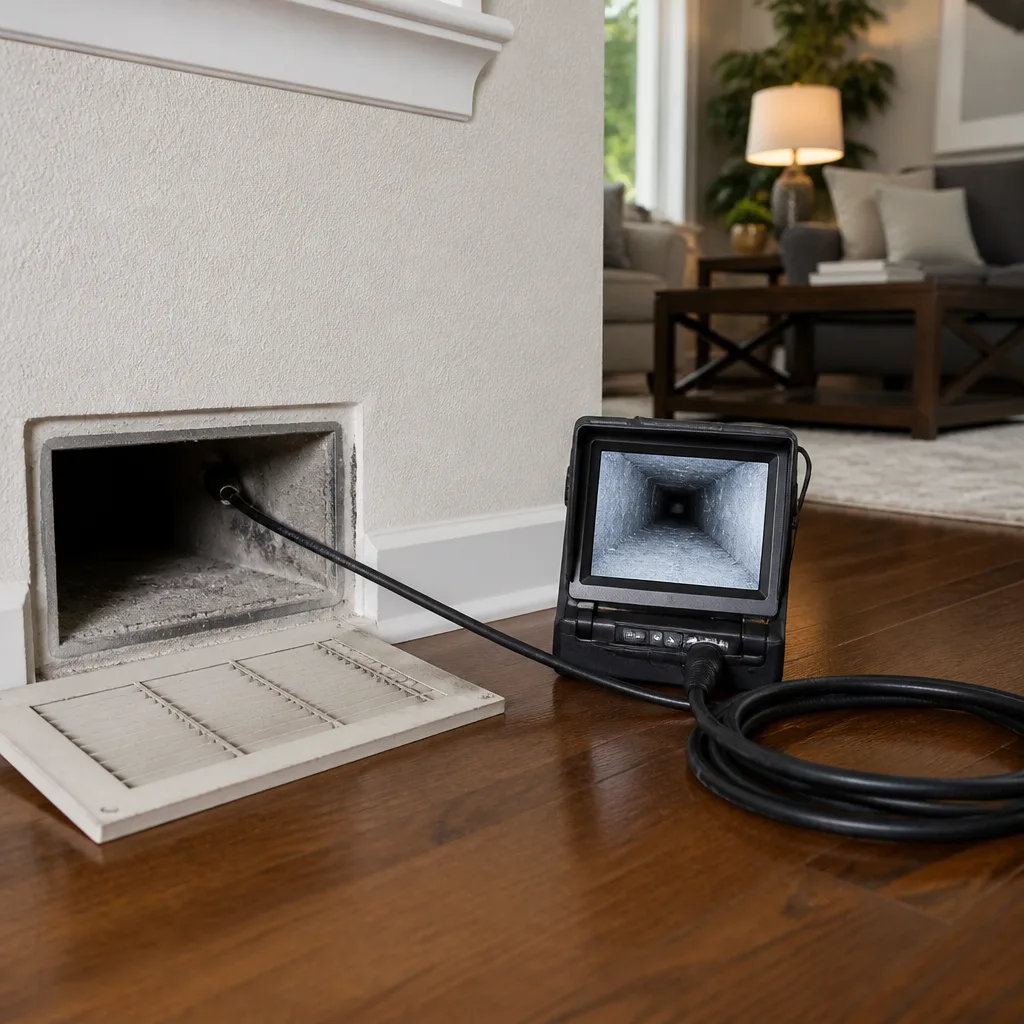 Camera inspection
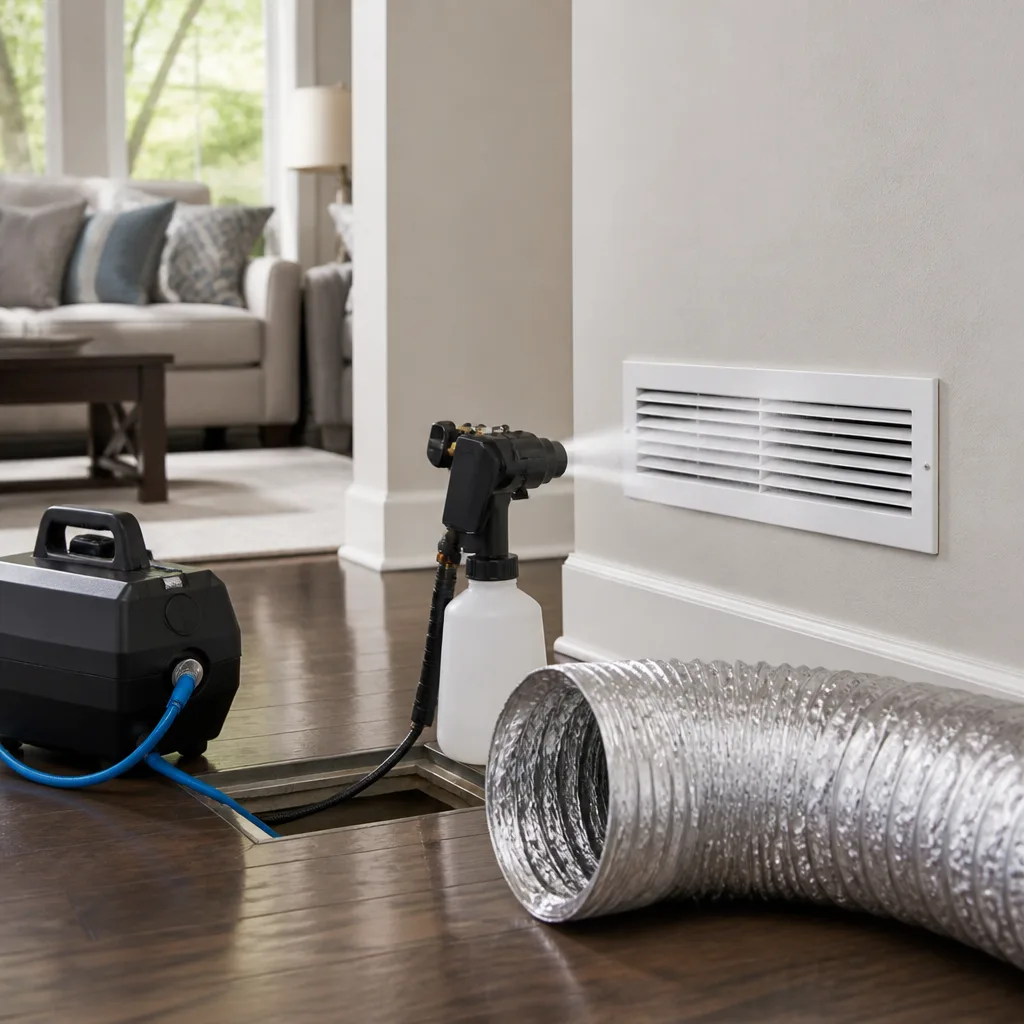 Sanitizing & deodorizing
Whole-system duct and dryer vent check with before-and-after photos - you see exactly what came out of your vents
That "$99 whole-house special" is a bait ad - the real number appears once they are in your hallway, or the "clean" is a shop-vac at the register. We photograph the inside of your ducts before and after instead.
How to Hire an Air Duct Cleaning Contractor in Rancho Santa Margarita: A Step-by-Step Guide
California does not require a specific license to clean air ducts. Anyone with a van and a shop vac can legally offer the service in Rancho Santa Margarita, which makes asking the right questions before you hire more important than almost any other home service decision. Most homeowners shop this job on price alone and end up with a “cleaning” that never touched the branch runs. This guide gives you a structured, question-by-question framework to separate technically capable contractors from price-driven operations, so you know exactly what you’re paying for before anyone unrolls a hose in your hallway.
Quick Answer
To hire an air duct cleaning contractor in Rancho Santa Margarita, verify what equipment they bring (Rotobrush, Nikro or Abatement Technologies units are commercial-grade; a shop vac is not), ask for a full pre-cleaning inspection, and compare quotes only after confirming all of you are scoping the same thing – trunk lines, every branch run and sanitizing. Demand a flat price per system in writing before work starts, plus before-and-after photos. The cheapest bid is usually cheap because it cleans less.
Styles & brands we work with
- Whole-home duct cleaning
- Dryer vent cleaning
- Camera inspection
- Sanitizing & deodorizing
Table of Contents
- Why California’s Licensing Gap Changes How You Hire
- The Five Technical Questions to Ask Before Getting a Quote
- What NADCA Membership Actually Verifies (and What It Doesn’t)
- How to Compare Quotes When Contractors Scope the Job Differently
- On-Site Red Flags: What a Real Pre-Cleaning Inspection Looks Like
- How to Verify a Contractor’s Equipment
- What Rancho Santa Margarita Homes Demand From a Duct Cleaner
- Why Cleaning Alone Isn’t the Whole Job
Why California’s Licensing Gap Changes How You Hire
In most states, a contractor license number is your first filter. In California, air duct cleaning sits in a gap: there’s no dedicated state license for it, so a business can legally advertise duct cleaning without holding a specialty trade credential. That doesn’t mean every operator is unqualified. It means the credential you’d normally lean on doesn’t exist, and the vetting burden shifts to you. In our experience, the difference between a thorough job and a wasted invoice shows up in what the contractor asks you and what they bring through the door – not in what’s printed on a business card.
What you can still verify:
- Business registration. Ask for the legal business name and confirm it’s registered with the California Secretary of State. This tells you who you’re actually contracting with.
- Insurance. Ask whether the contractor carries general liability insurance and can provide a certificate. A legitimate operation won’t hesitate.
- Industry affiliation. Membership in a recognized trade association (NADCA is the main one) is a useful data point, though not a substitute for the equipment questions below.
- Written scope. The quote itself should list what’s being cleaned, how, and with what equipment. Vagueness here is your first warning.
Rancho Santa Margarita sits inside a competitive Orange County service market, and that cuts both ways. Plenty of capable contractors work here, and plenty of pop-up operations do too. The framework below helps you tell them apart before anyone shows up.
The Five Technical Questions to Ask Before Getting a Quote
Ask these on the phone, before you book. A capable contractor answers them in detail without hesitation; a price-driven operation deflects or gives you a brochure line. The answers matter more than the price, because they tell you whether the quote covers the same work.
- “What equipment will you bring, and is it truck-mounted or portable?” Credible answer: a named commercial-grade system (Rotobrush or Nikro are the two we work with, and you should ask about both) matched to your home’s size. Red flag: “a high-powered vacuum.” That could mean anything, including a shop vac.
- “Will you inspect the system before cleaning?” Credible answer: yes, with a camera or visual walkthrough of supply and return runs, plus the air handler. Red flag: they’ll “start right away” or only check the registers.
- “Are you cleaning the trunk lines only, or every branch run?” Credible answer: every connected run, with a clear description of what that covers in your layout. Red flag: the word “main lines” with no mention of branches.
- “Do you clean the air handler and blower, or just the ducts?” Credible answer: at minimum, the accessible air handler components are inspected and cleaned as part of system service. Red flag: “that’s a separate thing” with no explanation.
- “Will I get before-and-after photos of my own system?” Credible answer: yes, of your ductwork and registers. Red flag: stock photos or “we don’t do that.”
If a contractor can’t answer all five clearly, don’t book the job. The quote will be meaningless because you won’t know what’s actually included. Our air duct cleaning page lays out exactly what a full-system scope includes, which is a useful benchmark for comparing any quote you receive.
What NADCA Membership Actually Verifies (and What It Doesn’t)
NADCA (the National Air Duct Cleaners Association) publishes the industry’s main cleaning standard and offers a certification for technicians and a membership for companies. Both are legitimate signals of professional intent. Neither is a substitute for confirming equipment and scope, and you should understand the gap so you don’t over-rely on a logo.
What NADCA membership typically indicates:
- The company has committed to a written industry standard for what “clean” means.
- The business has a stated interest in doing the job by a defined method rather than by the cheapest method.
- At least some staff have completed certification or training through the association.
What it doesn’t automatically verify:
- Equipment capability. A member company can still run underpowered portable vacuums if that’s what they own. For most Rancho Santa Margarita homes – typical two-story layouts with long, complex duct runs – a portable vacuum can lose suction over distance and struggle to pull debris from the far ends of the system.
- Scope. Membership doesn’t promise every branch run gets cleaned. That’s between you and the quote.
- Sanitizing or remediation capability. Routine cleaning and contamination-level air quality work are different jobs. Ask whether the contractor has equipment designed for remediation scenarios, such as Abatement Technologies units. If the answer is silence, they probably don’t.
Use NADCA membership as a floor, not a ceiling. The real question is whether the contractor has the equipment and the scope to do your specific system justice.
How to Compare Quotes When Contractors Scope the Job Differently
Two quotes that differ by a few hundred dollars are usually not describing the same job. That’s the single most common mistake in comparing bids. One contractor may quote trunk-line cleaning only; another quotes every branch run; a third adds sanitizing or a sealing inspection. Before you compare numbers, make every contractor describe their scope in the same categories, then line them up:
| Scope item | What to confirm |
|---|---|
| Trunk lines | Cleaned with commercial vacuum, connected to the air handler |
| Branch runs | Every run to every register, not “main lines only” |
| Air handler / blower | Accessible components inspected and cleaned |
| Registers and grilles | Removed, cleaned, reinstalled |
| Pre-cleaning inspection | Camera or visual check before and after |
| Before-and-after photos | Of your system, not stock images |
| Sanitizing (optional) | Only if contamination, odor or mold is present |
| Sealing and repair check | Inspection of seams, joints, disconnected runs |
Ask every contractor to fill those rows with a yes, no or “included.” A quote that covers four rows is not the same price comparison as one covering all eight. That’s how a bid can be cheaper and still be more expensive – you pay twice when the first job misses the branch runs and the smell persists.
One flat price per system, agreed before work starts, is the honest structure here. If a quote is built on a per-vent price or a teaser coupon figure, ask for the whole-system number before booking.
On-Site Red Flags: What a Real Pre-Cleaning Inspection Looks Like
Every legitimate job starts with an inspection. If a contractor arrives and immediately unrolls a hose without looking at your system, they’re cutting corners – and you’ve already paid for the cut. Here’s what a real inspection looks like, and what to watch for.
A proper pre-cleaning inspection involves:
- Checking the air handler and blower to see how much debris has accumulated and whether the coil is accessible.
- Looking inside at least a few supply and return registers to gauge the contamination level.
- Using a camera or visual access point to check duct interior – seams, joints and branch connections.
- Reporting what’s found: the condition, any disconnected runs, any moisture or mold.
- Adjusting the quote to the actual condition, in writing, before starting.
Red flags to watch for on-site:
- No inspection at all – “we’ll just start cleaning.”
- Only one register checked, with a promise that “it’s the same everywhere.”
- A refusal to open the air handler cabinet.
- Hidden fees added mid-job (“we found extra runs, that’s another charge”).
- No before-and-after photos offered spontaneously.
If you see two or more of those, stop the job and get a second opinion. In our experience, the inspection is where the real skill shows – and where a lot of cheap quotes fall apart. If a contractor skips it, you don’t know what was cleaned or why.
How to Verify a Contractor’s Equipment
Equipment is the most concrete question in the whole process and the one most homeowners never ask. Portable vacuum units are not adequate for most Rancho Santa Margarita home sizes, particularly two-story layouts with long duct runs. They lose suction over distance, and the far ends of your system barely get touched. Commercial-grade systems are built differently: higher static pressure, longer hose reach, and a design intended to move debris all the way back to the collection unit.
Ask about specific brands. The ones worth naming back to the contractor:
- Rotobrush – a name in purpose-built residential duct cleaning equipment. Ask: “Do you use Rotobrush?”
- Nikro – commercial-grade vacuum and cleaning systems used by professional contractors. Ask: “Do you use Nikro?”
- Abatement Technologies – equipment designed for contamination-level air quality scenarios. If the contractor owns any, they’re equipped for more than routine cleaning.
You don’t have to know how these systems work internally. You just have to know the names so you can ask and listen for a straight answer. A contractor using Rotobrush or Nikro will tell you so proudly. One running a shop vac will change the subject.
Why the brand matters so much: it tells you what the contractor can actually reach. Cleaner air starts at the source, and if the equipment can’t pull from the far end of the system, the “cleaning” stops at the nearest registers. When you see the brand names and the system size in the quote, you know the job has a real technical foundation. Our HVAC cleaning page explains how equipment choice affects what gets cleaned across the whole system.
What Rancho Santa Margarita Homes Demand From a Duct Cleaner
Rancho Santa Margarita is a suburban Orange County community, and its housing gives duct cleaning contractors a few consistent challenges. Neighborhoods like Robinson Ranch, Trabuco Canyon-adjacent areas, Wagon Wheel, and Melinda Heights all feature a mix of two-story homes with complex duct runs. A two-story run is long; long runs punish underpowered equipment. That’s one of the reasons we don’t recommend hiring on price alone here.
Our climate is also worth thinking about. Orange County’s mild climate means the HVAC system runs off and on through most of the year rather than idling through a hard freeze or blasting continuously through a desert summer. That pattern actually encourages dust and allergen buildup in the return side, because the system isn’t moving air consistently enough to keep debris suspended. Homeowners who notice increasing dust on furniture or a musty smell when the fan kicks on are usually seeing a system that’s overdue, not a housekeeping problem.
Add in the reality that many Rancho Santa Margarita homes are 15 to 30 years old, and the likelihood of disconnected or leaking duct seams rises. That’s exactly why cleaning alone isn’t the whole job – sealing and repair catch what cleaning misses. When you interview contractors, ask whether they can spot a disconnected run, and whether they offer repair. If the answer is “we just clean,” you’re getting half the service.
Why Cleaning Alone Isn’t the Whole Job
Your HVAC system works as one unit. The ductwork, the air handler, the blower, the registers and the return side all interact. Cleaning the ducts and leaving a leaking seam or a fouled blower behind means the system recontaminates within weeks. That’s the hidden flaw in a lot of “duct cleaning” – it treats the visible part of the job and skips the cause.
A full-system approach covers:
- Air duct cleaning – every trunk line and branch run, with commercial-grade vacuum and agitation.
- HVAC cleaning – the air handler, blower and accessible coil components.
- Duct repair and sealing – reconnecting loose runs, sealing seams that leak conditioned air.
- Air quality and sanitizing – treatment when contamination, odor or moisture is present, which is where Guardsman-backed protection treatments come in.
- Dryer vent cleaning – a fire-prevention measure recognized by NFPA guidelines, separate from the HVAC ducts but often part of the same visit.
One company coordinating all five means the scope doesn’t get lost between trades. And it means whatever needs fixing is spotted during the same inspection that triggers the cleaning – not six months later. If you’re also due for a dryer vent check, our dryer vent cleaning service can be scheduled alongside. Our main page at Rancho Santa Margarita Air Duct Cleaning Pros explains how the full-system scope fits together.
For homeowners adding filtration or humidity control, equipment from Honeywell and Aprilaire integrates with your existing system, so filtration upgrades can happen alongside cleaning. Ask about it in the same visit rather than treating it as a separate project later.
Common Mistakes to Avoid
- Hiring on price alone. A quote that’s several hundred dollars below the others is usually scoping a smaller job, not offering a better deal. Compare scope rows before comparing totals.
- Skipping the pre-cleaning inspection. If you let a contractor start without inspecting, you’ve accepted that you can’t verify what was cleaned. Insist on the walkthrough.
- Not asking about equipment. “A high-powered vacuum” isn’t a brand. Ask specifically about Rotobrush, Nikro or Abatement Technologies.
- Accepting trunk-only cleaning as full cleaning. In a Rancho Santa Margarita two-story layout, the branch runs are most of the system. If they’re not cleaned, the job isn’t done.
- Ignoring disconnected runs. A duct that’s pulled loose at a joint is dumping conditioned air into a wall cavity, not the room. Ask whether the contractor can spot and fix that.
- Paying per vent instead of per system. Per-vent pricing invites upsells and hidden add-ons. Ask for one flat price for the whole system, written down.
- Booking on a coupon without reading the scope. Coupons usually cover the smallest possible job. Confirm what’s included before the truck arrives.
See the difference
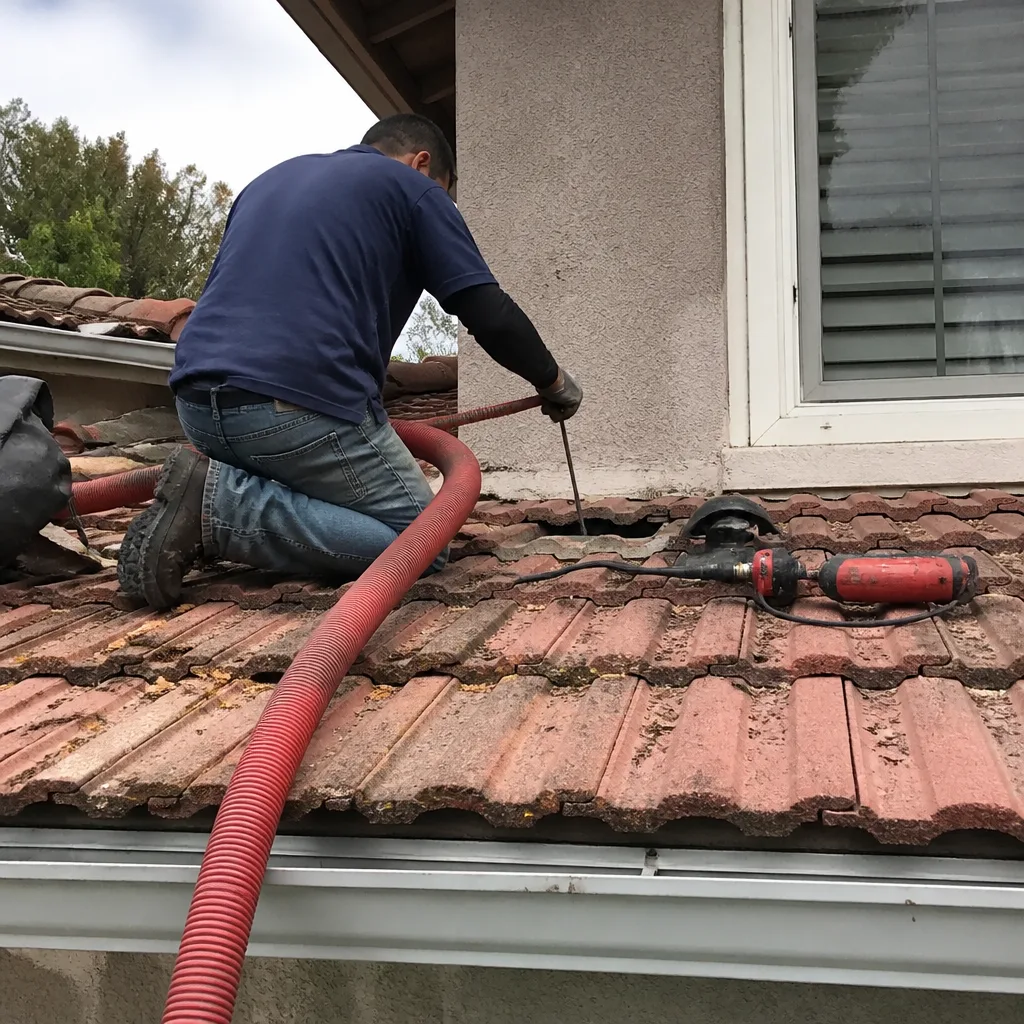 Before
 After
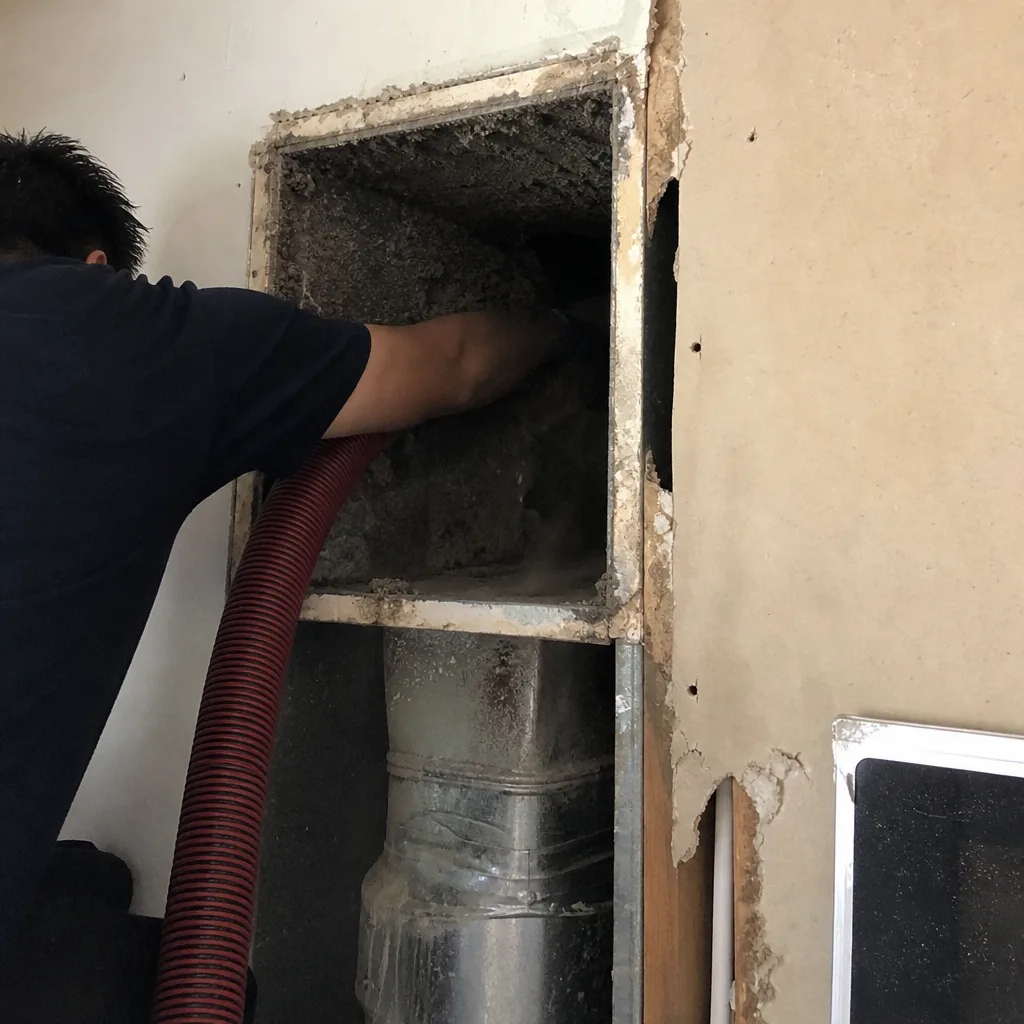 Before
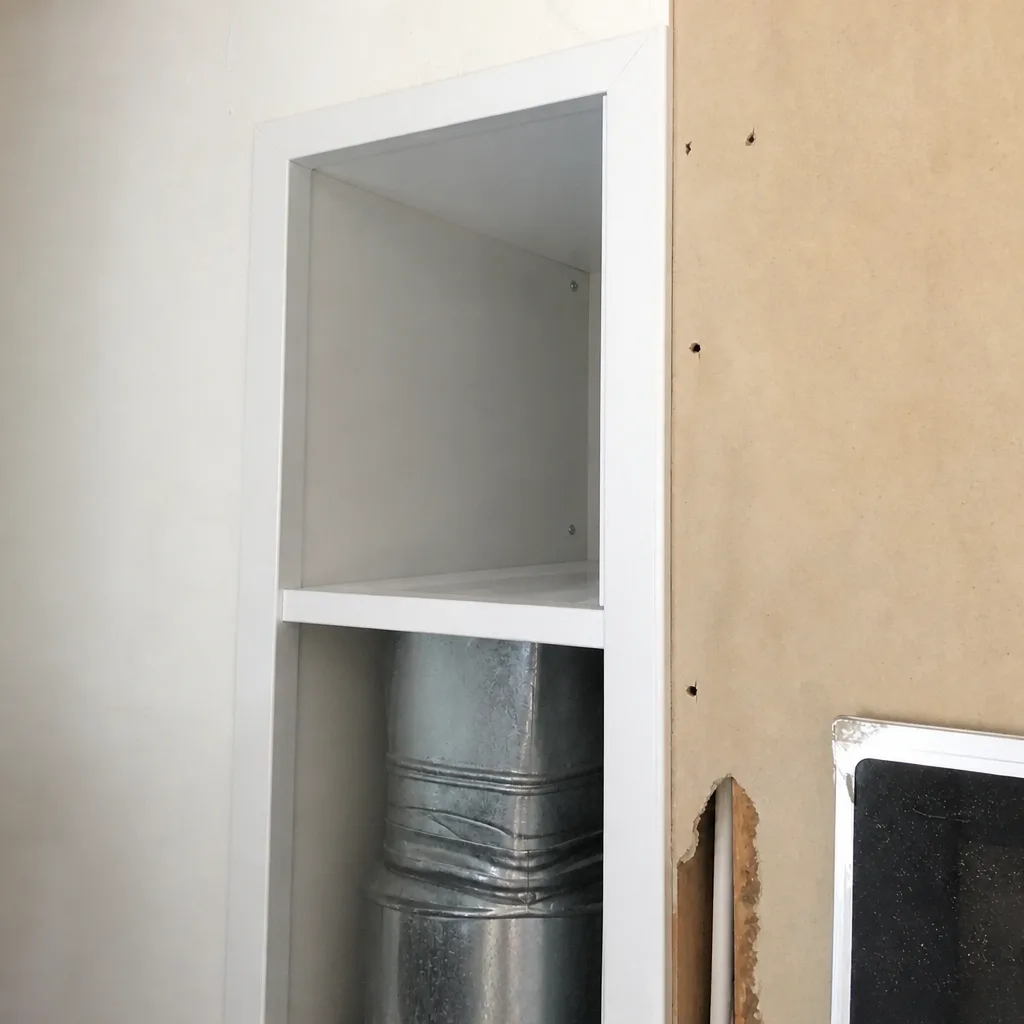 After
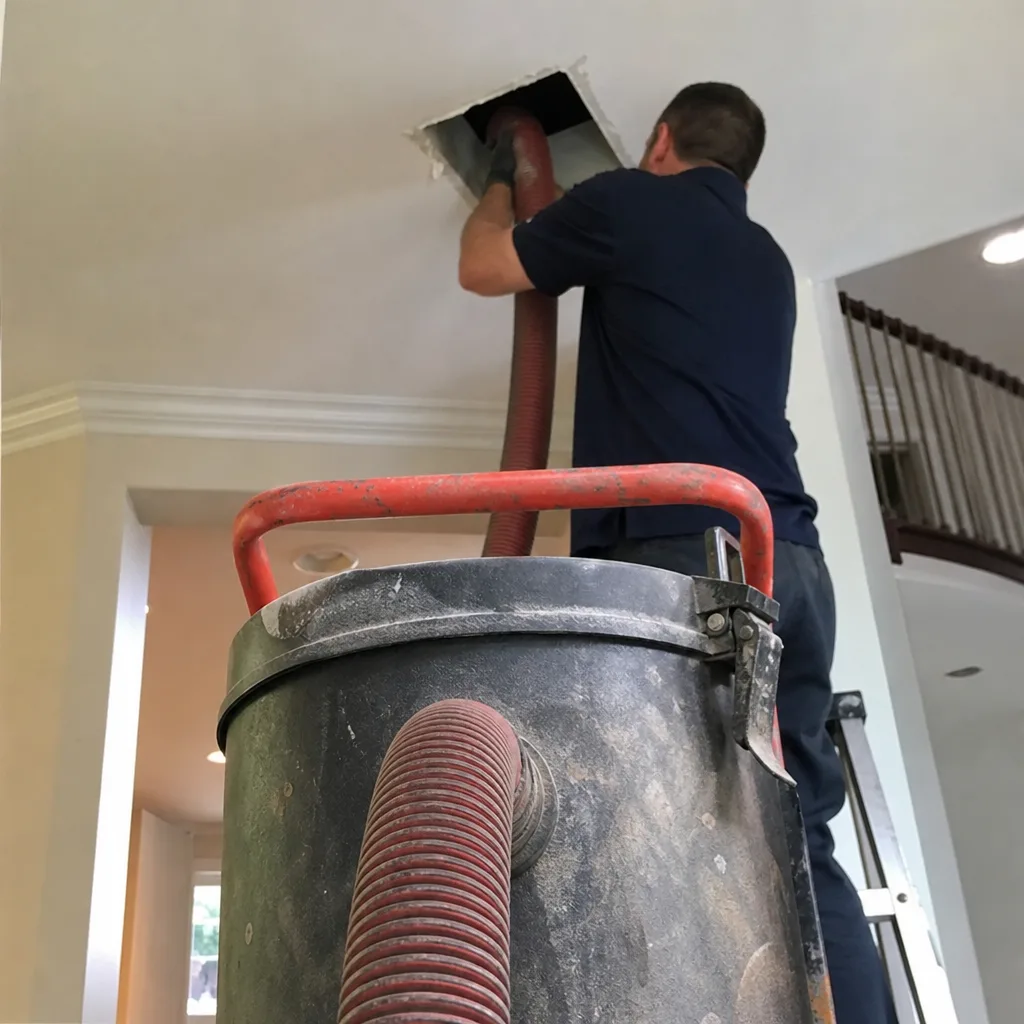 Before
 After
When to Call a Professional
Some signs point to a duct system that needs a trained professional rather than a homeowner’s own cleaning. Call when you notice a persistent musty or moldy smell when the system runs, visible dust on furniture returning within days of cleaning, or family members with allergies or asthma whose symptoms worsen indoors. Call if your energy bills climb without an obvious cause, or if a room never heats or cools as well as the rest of the house – that can signal a disconnected run or a leaking seam. And call if it’s been more than a few years since the system was last serviced, because the condition has likely changed. Rancho Santa Margarita Air Duct Cleaning Pros offers free estimates in Rancho Santa Margarita – call (877) 792-5932 for a free estimate.
Frequently Asked Questions
No. California doesn’t require a dedicated state license to clean air ducts, so anyone can legally offer the service. That’s why the vetting falls on you: verify insurance, ask the equipment questions, demand a written scope and confirm the inspection process before booking.
It depends on the number of runs and how much contamination is present, so a contractor should always scope it on-site before quoting. Any honest quote is a flat price for the whole system, agreed in writing, before work starts. Call (877) 792-5932 for an exact quote – estimates are free.
Cheaper quotes usually cover fewer branch runs, skip the air handler, or use portable vacuum units instead of commercial equipment. A quote isn’t comparable until you know it covers every branch run, the air handler, and before-and-after photos. If two quotes differ widely, ask each contractor to list what’s included in those categories.
You ask for before-and-after photos of your own system, not stock images. A capable contractor will photograph the duct interior and the registers before and after, and walk you through what changed. If a contractor won’t provide photos, that’s a red flag.
There’s no hard rule – it depends on the home. In Rancho Santa Margarita, most homes benefit from an inspection every few years, and cleaning when the inspection shows real buildup, moisture, or disconnected runs. Allergy sufferers and homes with pets may need it more often; a well-maintained system with a clean filter may need it less.
Ask whether they use Rotobrush, Nikro or Abatement Technologies equipment, and whether it’s truck-mounted or portable. In a typical Rancho Santa Margarita two-story home, the length of the duct runs makes portable units less effective. The brand answer tells you more about capability than a certification alone. Call (877) 792-5932 for an exact quote – estimates are free.
The Bottom Line
Hiring an air duct cleaning contractor in Rancho Santa Margarita comes down to verifying what a quote actually covers. California’s licensing gap means you’re the filter, so ask the five equipment and scope questions, insist on a pre-cleaning inspection, and compare quotes by scope rows – not by total. Confirm commercial-grade equipment (Rotobrush, Nikro, Abatement Technologies), a written flat price per system, and before-and-after photos. Cleaning alone leaves the root cause – leaks, disconnected runs, a fouled blower – untouched. Treat the system as one unit, and hire for capability over price. We answer 24/7 with a free estimate: call (877) 792-5932. Fast dispatch from 7am to 7pm, Sunday through Friday.
Written by the team at Rancho Santa Margarita Air Duct Cleaning Pros.