
Last updated November 23, 2026
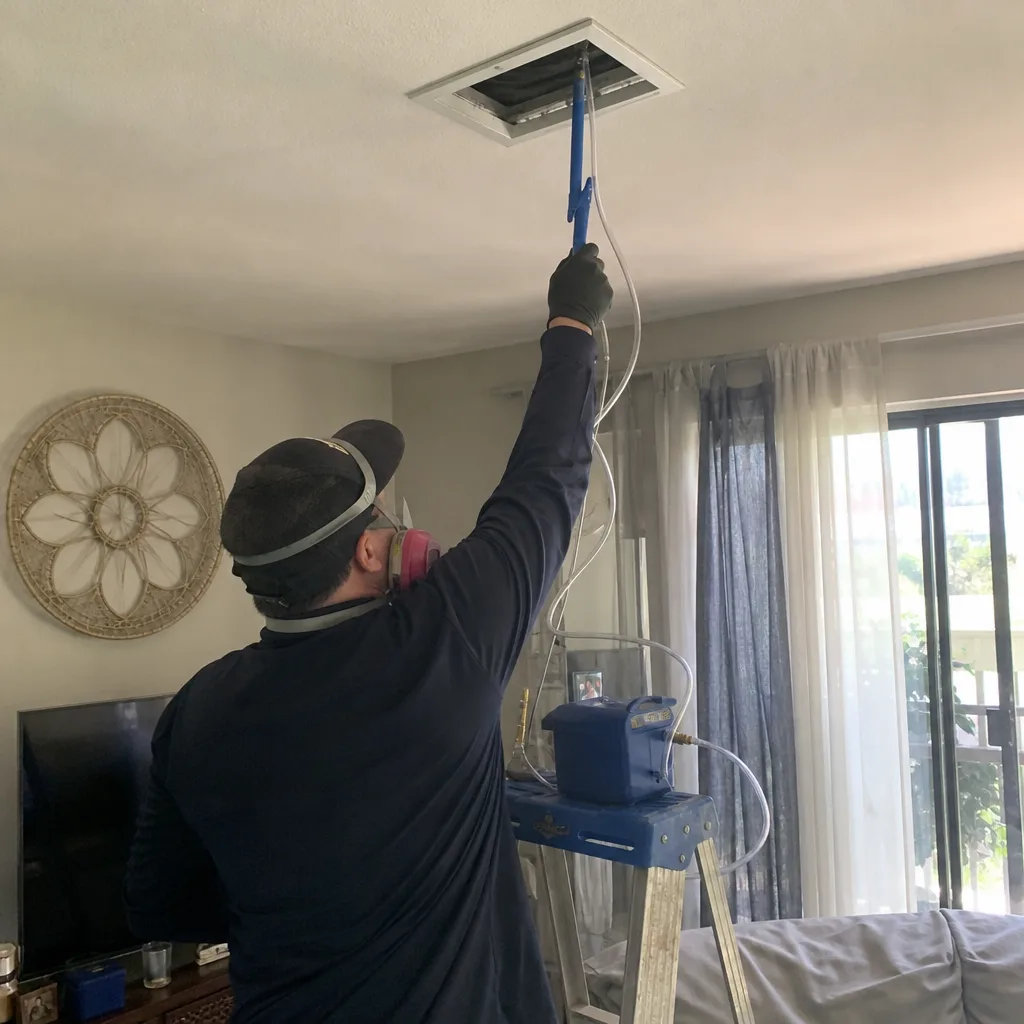
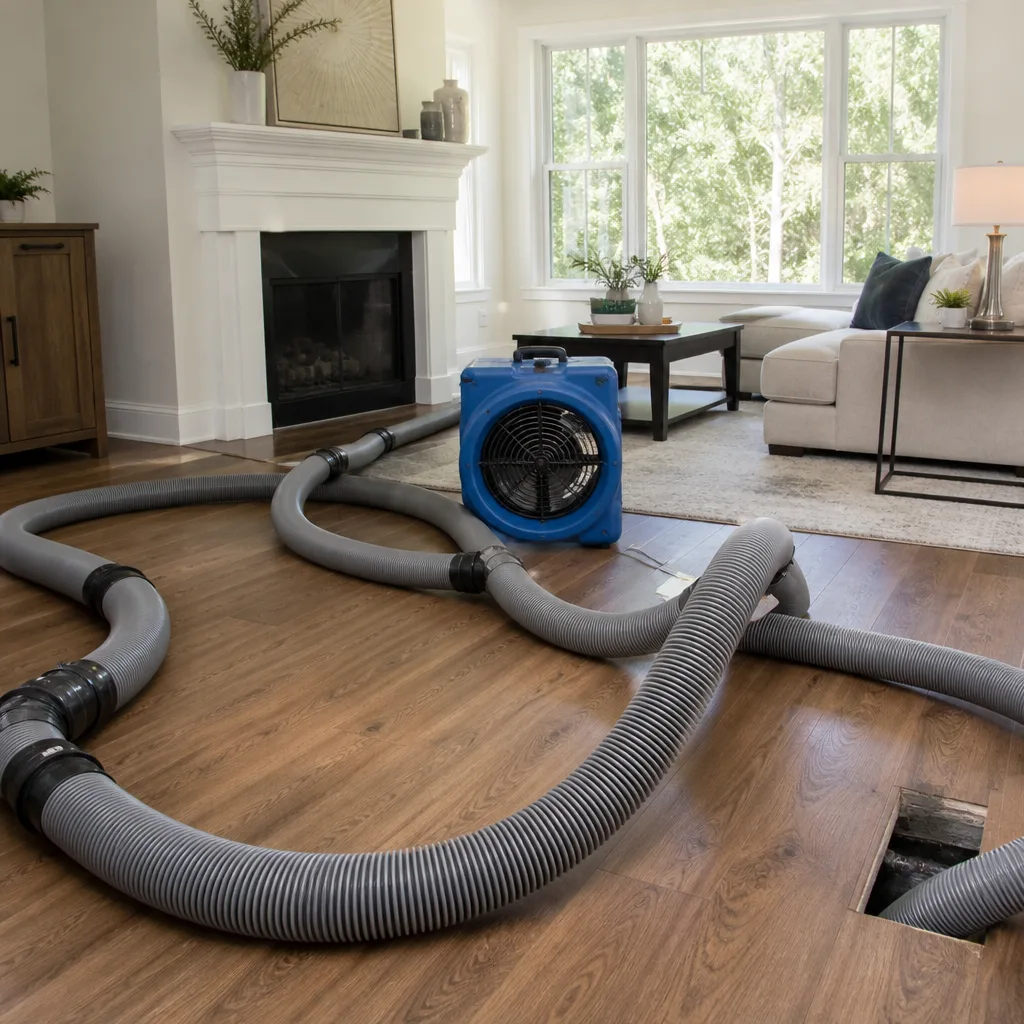 Whole-home duct cleaning
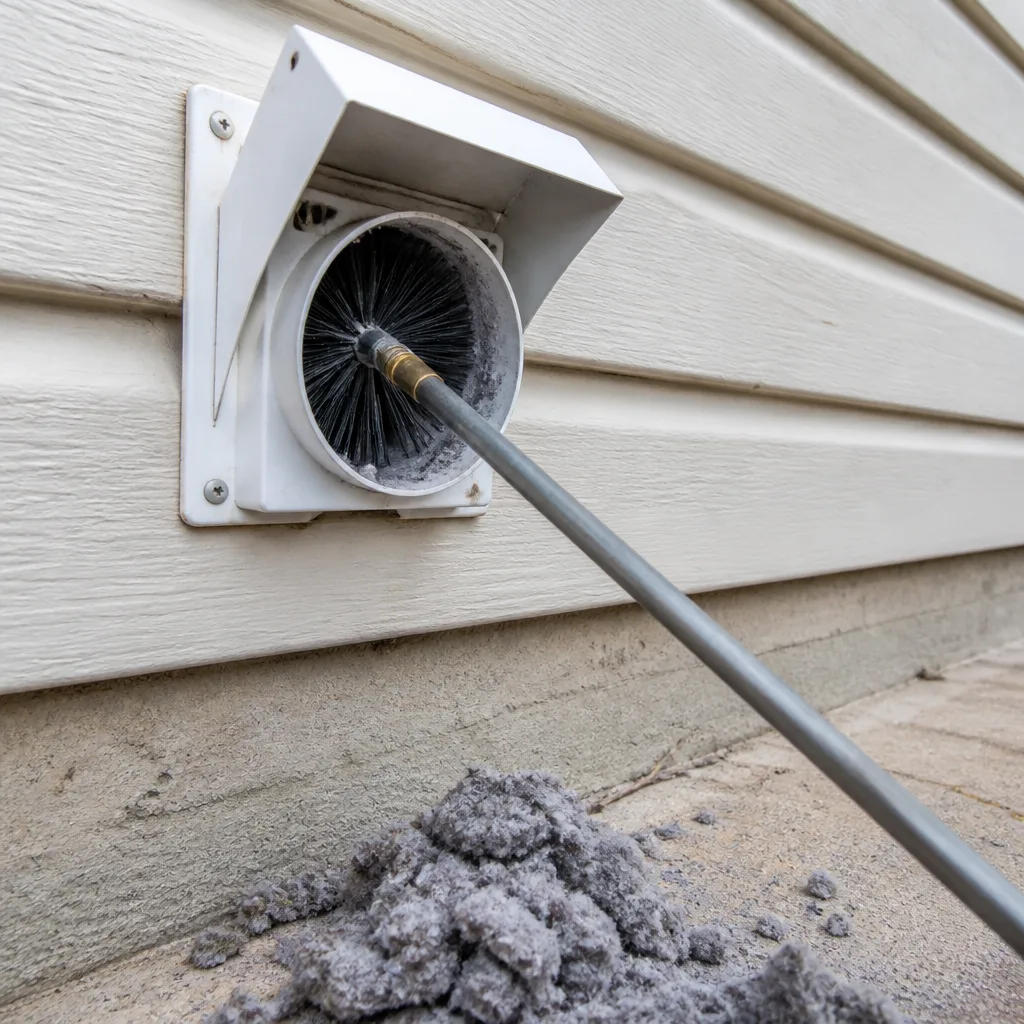 Dryer vent cleaning
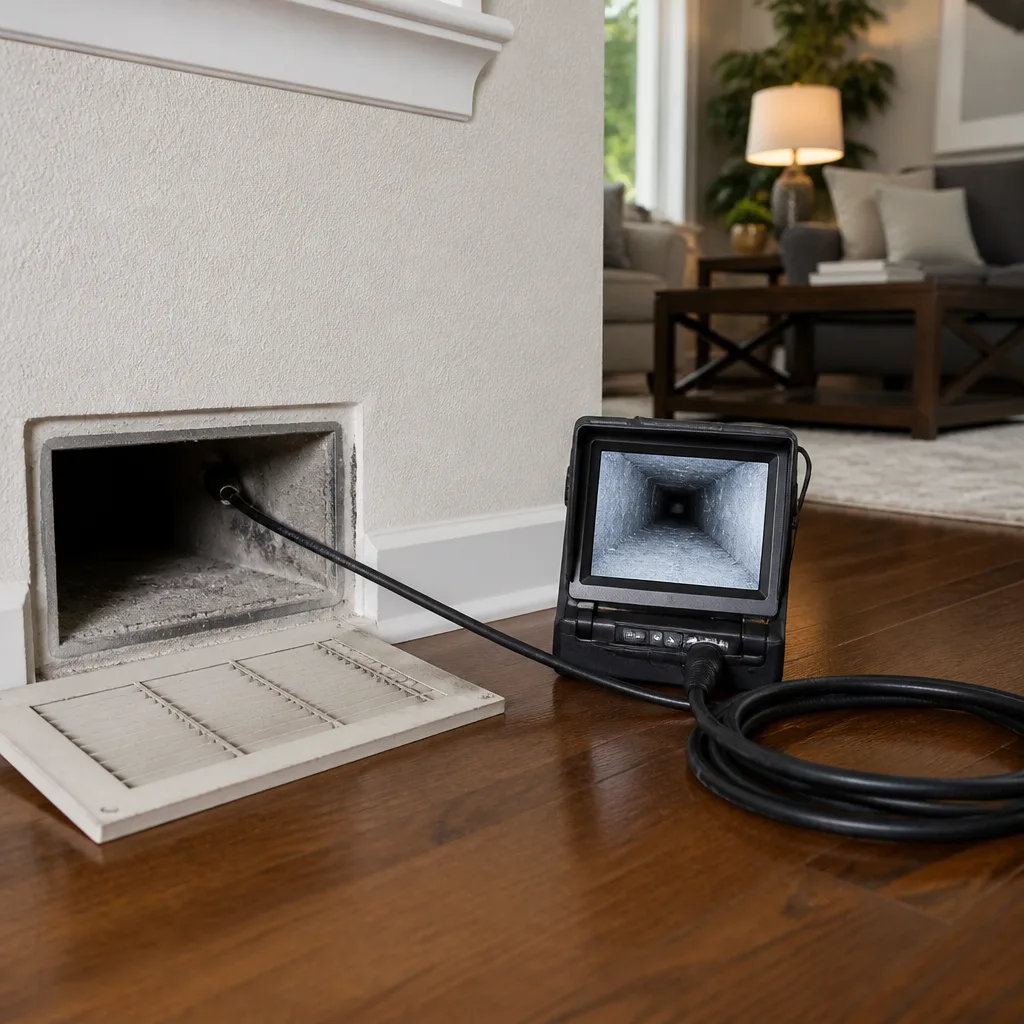 Camera inspection
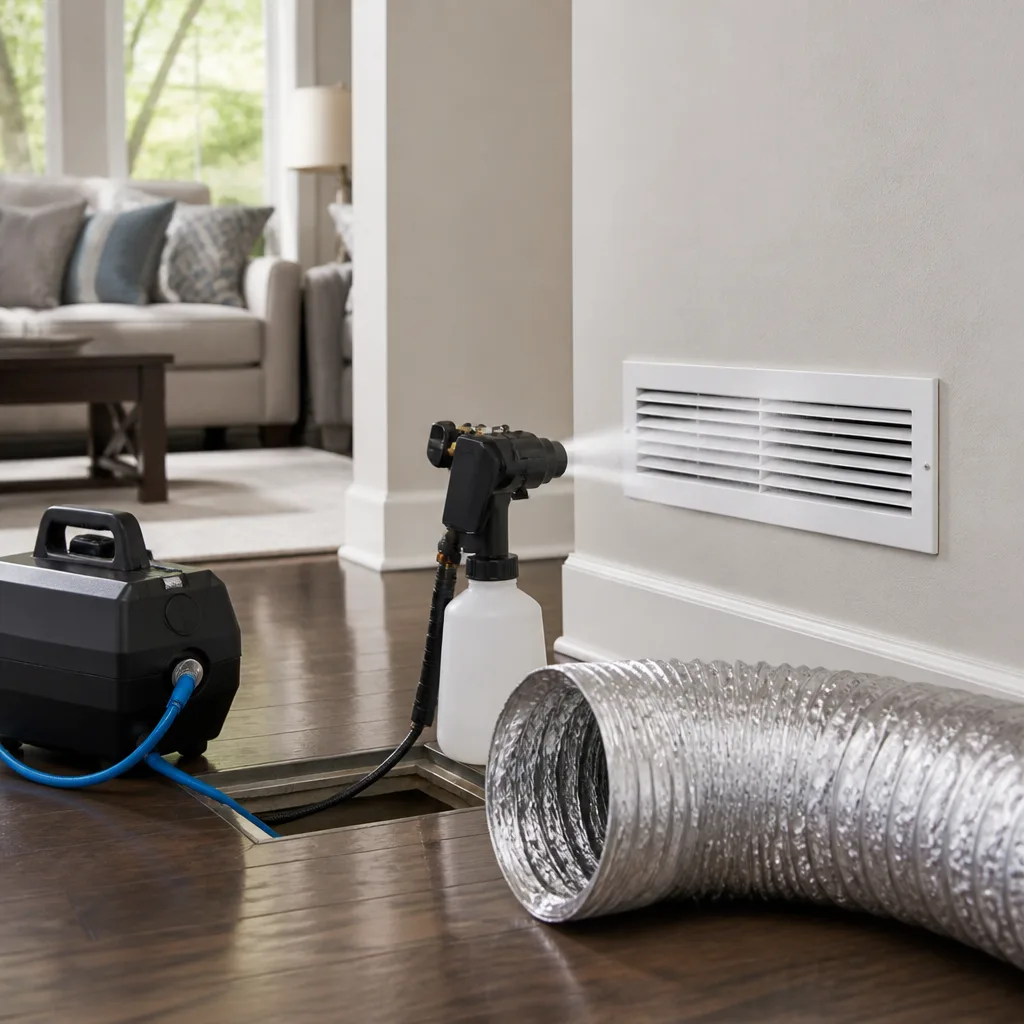 Sanitizing & deodorizing
Whole-system duct and dryer vent check with before-and-after photos - you see exactly what came out of your vents
That "$99 whole-house special" is a bait ad - the real number appears once they are in your hallway, or the "clean" is a shop-vac at the register. We photograph the inside of your ducts before and after instead.
DIY vs Professional Air Duct Cleaning: The Rancho Santa Margarita Homeowner’s Decision Guide
A shop vac generates roughly 150 CFM of suction. A commercial truck-mount duct cleaning system generates 15,000 to 20,000 CFM. That gap is not a marketing line, it’s the entire argument. Duct cleaning isn’t a scrubbing contest, it’s an extraction problem, and the equipment determines whether contamination leaves your house or just gets relocated inside it. In Rancho Santa Margarita, where a lot of homes were built with flexible duct systems that have now aged a couple of decades, the difference matters more than it does in newer construction. What follows is a straight technical comparison: what DIY can honestly accomplish, where it fails, what rental equipment actually delivers, and how a Rancho Santa Margarita homeowner should decide which route fits their house.
Quick Answer
Routine maintenance like cleaning floor registers, changing filters, and emptying the dryer vent lint trap is genuinely worth doing yourself. Actual duct cleaning is a different job. It requires sustained negative pressure and mechanical agitation working together, and no consumer-grade vacuum or rental unit can generate enough airflow to pull loose debris out of an entire duct system. In most Rancho Santa Margarita homes, DIY agitation without that extraction capability spreads dust through the living space instead of removing it, which leaves indoor air quality worse in the days following the attempt.
Styles & brands we work with
- Whole-home duct cleaning
- Dryer vent cleaning
- Camera inspection
- Sanitizing & deodorizing
Table of Contents
- Why Duct Cleaning Is a Physics Problem, Not an Effort Problem
- Negative Pressure: The Mechanism That Actually Removes Contamination
- What You Can Legitimately Do Yourself
- Why DIY Agitation Without Extraction Makes Air Quality Worse
- What Rental Equipment Can and Can’t Do
- The Rancho Santa Margarita Case for Professional Cleaning
- A Decision Framework for Your Home
- What a Professional Cleaning Actually Involves, Step by Step
Why Duct Cleaning Is a Physics Problem, Not an Effort Problem
Most homeowners approach this as a labor question. If I spend a full day on it, scrub every register, and rent the biggest vacuum at the hardware store, I should get a comparable result to a professional. That reasoning works for pressure-washing a driveway. It does not work for a duct system, because the obstacle isn’t how hard you scrub. It’s whether the debris you’ve loosened has anywhere to go.
A residential duct system in a Rancho Santa Margarita home is a network of trunk lines and branches, often running through attic space and wall chases, with a total length that can easily exceed a hundred feet. Dust, pet dander, pollen, and construction residue settle along the bottom of the duct floor and cling to the walls. To remove them, you have to loosen the material and then move enough air through the system to carry it out to a collection point. The first half of that is agitation. The second half is capture. Do the first without the second, and the material you loosened is now airborne inside a closed loop that connects directly to every room in your house.
This is where the CFM number matters. CFM, cubic feet per minute, measures how much air volume moves through the system. A shop vac at the register pulls about 150 CFM at the hose end, and considerably less once you account for the resistance of a long duct run. A commercial duct cleaning system built for the job pulls thousands of CFM and, critically, is connected to the system in a way that creates negative pressure throughout, not just at a single point. Our technicians have up to 15 years of experience, and the consistent finding across that work is that the equipment is not a shortcut. It’s the whole method.
This is also why the tooling question separates real duct cleaning from the versions you see advertised at a low teaser price. The equipment brands that contractors rely on, Rotobrush and Nikro among them, exist specifically because consumer vacuums can’t do this work. Abatement Technologies equipment serves the same role on the higher end, in situations where contamination levels call for containment-grade capture rather than routine cleaning. If you want the full picture of what professional air duct cleaning involves, that page covers the scope in detail.
Negative Pressure: The Mechanism That Actually Removes Contamination
Negative pressure means the pressure inside your duct system is lower than the pressure in the rooms around it. When that condition exists, air flows into the ducts from the living space rather than out of them, and every register, every joint, and every seam becomes an intake instead of an exhaust. Loose contamination gets pulled toward the collection point rather than pushed into the room.
This is a subtle point that a lot of homeowners miss, and it’s worth sitting with. If you poke a brush into a register and stir up dust with the system running, or even with a shop vac attached at one register, you’re likely creating positive pressure in parts of the system. The result is that dust is expelled through gaps in the ductwork, through unsealed joints, and through the supply grilles of rooms you haven’t gotten to yet. The visible dust on your registers may look improved. The air in your child’s bedroom is worse.
Setting up genuine negative pressure in a house requires several things working together:
- A high-volume vacuum unit connected to the main trunk or to a large opening in the system
- Sealed or capped register openings so air enters only where the technician intends it to
- Compressed air, rotary brushes, or whip lines fed through each branch to loosen material so the airflow can carry it away
- Containment at the vacuum end so the collected material is captured, not exhausted into the attic or the living space
One more element matters in older homes: duct sealing after the cleaning. Once ducts are cleaned, any gap in the system becomes a recontamination pathway, and it also leaks conditioned air. In a mild-winter climate like Rancho Santa Margarita, that leak shows up mostly on the cooling side, where a duct run in a hot attic loses efficiency fast. Cleaning without sealing treats the symptom. Cleaning with sealing treats the cause, which is why duct repair and sealing sits inside the same service line as cleaning rather than being treated as an upsell. You can read more on HVAC cleaning for how the air handler and coil fit into the full picture.
What You Can Legitimately Do Yourself
We’re not going to argue that everything in your duct system requires a professional. Several maintenance tasks sit legitimately in the homeowner’s column, and doing them consistently will reduce how often you need a full cleaning. These are the tasks worth having on a calendar:
- Clean the supply and return registers. Remove the grille, wash it in the sink or hose it off outside, dry it, and reinstall. This clears the visible dust layer and keeps it from being drawn into the system when air starts moving.
- Change the air filter on schedule. A clogged filter reduces airflow through the whole system, forces the blower to work harder, and lets more dust bypass into the ducts and the coil. Check it monthly during heavy cooling season and change it according to the filter rating and your home’s dust load.
- Vacuum around the return grille and the air handler access. Dust accumulates in these areas and gets pulled in. A quick vacuum with a brush attachment limits the load.
- Clear the dryer vent lint trap before every load. This is the single most effective fire-prevention habit in the house, and NFPA guidance is unambiguous on it. It’s a two-second task that also improves drying efficiency.
- Inspect the outside dryer vent flap. Confirm it opens freely when the dryer runs and closes when it stops. A stuck flap or a crushed transition hose at the back of the dryer is common and easy to spot.
- Keep the area around return grilles clear. Furniture pushed against a return restricts airflow and increases static pressure in the system, which is a quiet cause of poor performance.
What these tasks share is that they address the source rather than the duct interior. They reduce how much contamination enters the system and keep the airflow path open. Where they stop is at the duct wall itself, and that’s the boundary.
Why DIY Agitation Without Extraction Makes Air Quality Worse
Here’s the part most homeowner guides skip. Attempting to clean your own ducts with a shop vac, a brush, and a lot of determination doesn’t produce a neutral result. It produces a negative one, at least in the short term.
The mechanism is simple. Loosened dust, whether you dislodge it with a brush, a leaf blower, or compressed air, has to be captured or it stays airborne. A shop vac connected at one register creates localized suction. It does not depressurize the duct system. So the dust you dislodge in the kitchen branch can settle into the living room trunk, and the dust you dislodge in the bedroom branch can settle back onto the same duct floor once the airflow stops. Some fraction of the loosened material will be expelled through register gaps, seams, and unsealed joints into the room.
How long does the effect persist? In our experience, homeowners who attempt this and then call us describe it in the same way. For several days afterward, the house feels dustier than usual, surfaces that were clean show a fresh film, and allergy symptoms flare. The dust that’s been resuspended has to settle somewhere, and it settles on horizontal surfaces and in soft furnishings. A HEPA vacuum run over the house afterward will pull much of it back out, but the source contamination in the ducts remains, now redistributed. Ventilation helps too, especially during the spring and fall when Rancho Santa Margarita weather makes it easy to open the house up. But the underlying problem is untouched.
This is also the reason a “clean your own ducts with a shop vac” tutorial can be actively misleading. The video will look successful. The register comes out dust-free. What the camera can’t show is what happened inside the branch lines and whether the air in the next room got better or worse.
What Rental Equipment Can and Can’t Do
A realistic assessment of the consumer and rental market saves homeowners both money and frustration. Here’s what’s actually available and what each tool can reasonably accomplish.
- Shop vacuums with HEPA filtration (roughly 150 CFM): Effective at the register itself, and genuinely useful for the surfaces around the return. Not capable of depressurizing a duct system, and the CFM drops sharply as hose length and filter loading increase. Best use is post-cleaning touch-up and general household dust control.
- Specialty duct cleaning attachments sold online: These are brush heads and flexible wands designed to be fed down a branch line from a register opening. They can dislodge material. They cannot extract it, because the vacuum behind them is the same shop vac that can’t move the air volume. Useful for reaching a specific obstruction on a short branch, but they amplify the agitation-without-extraction problem if used on a full system.
- Rental carpet and multi-purpose extractors: Some rental yards market these as duct-capable with the right hose adapter. They are not. The airflow volume and the containment design are both wrong for a duct system, and the hose adapters frequently leak at the register, which is where you most need a seal.
- Compressed air and leaf blowers (do not use): These are sometimes recommended as a way to “blow the dust out.” They do exactly that: they blow it into your house. There is no safe way to use positive-pressure air on a duct system without a negative-pressure vacuum running simultaneously to capture what you loosen.
What a professional system does that none of these can: it connects to the trunk in a way that seals and pulls, uses rotary agitation designed for the duct’s interior, feeds through long branch runs, and captures the contamination in a collection system designed for that volume. That’s why companies use Rotobrush and Nikro equipment for duct work rather than adapting consumer tools. It’s a different class of machine doing a different job. The best consumer-grade option genuinely available is a HEPA shop vac used correctly on registers and surfaces, plus a filter maintenance schedule. That’s a real recommendation, not a dismissal. It just isn’t duct cleaning.
The Rancho Santa Margarita Case for Professional Cleaning
Rancho Santa Margarita has a specific housing profile that makes this decision a little different from the general case. The city’s residential buildout happened largely in the 1980s and 1990s, which means a substantial share of homes here were built with flexible duct systems, sometimes called flex duct, that are now decades old. Flex duct is a strong performer when it’s new and correctly installed. It’s also less forgiving than rigid metal duct, particularly in an attic environment.
Three things happen to aging flex duct in this climate:
- The inner liner can crack, sag, or separate from the outer jacket, creating pockets where debris collects and restricting airflow
- Joints and connections can loosen over time, which opens pathways for attic air (and attic dust) to enter the system
- Runs that were stretched or compressed during original installation can develop low spots that collect dust and condensation
The reason this matters to the DIY question is that aggressive agitation inside a compromised flex duct can make the problem worse. A rotary brush fed through a duct whose liner is already sagging can damage it further. That’s why a camera inspection before agitation is standard practice on older systems. A technician running a camera through the branch lines can see the condition of the liner, identify collapsed sections, and adjust the approach. It also determines whether duct repair is needed before or alongside cleaning, which keeps the whole job from being redone later.
Rancho Santa Margarita’s inland foothill setting adds its own angle. The area sits in a warm, dry microclimate with a long cooling season and frequent offshore wind events that push dust and pollen inland. That dust load works its way into return systems over time. The hotter attic temperatures also stress flex duct, accelerating the wear. And because the dry season dominates, the “open the windows for a few days and let it settle” solution doesn’t work here nearly as well as it does in a wetter climate where the air clears quickly.
The soil movement that comes with the dry-season and wet-season swing in Southern California also loosens duct connections over time, particularly where ductwork meets the air handler and where runs pass through wall chases. Once connections loosen, warm attic air is drawn into the return, which cuts cooling efficiency and pulls attic dust into the supply air. Sealing after cleaning is what addresses this, and it’s why we treat cleaning and sealing as part of the same scope rather than as separate projects. For the fire-prevention side of the same system, our dryer vent cleaning page explains how lint buildup becomes a genuine hazard and what a proper vent cleaning involves.
A Decision Framework for Your Home
Most homeowners can sort themselves into one of a few situations. Here’s how to figure out which one matches your house.
Choose DIY maintenance if…
- You’re doing routine upkeep on registers and filters, and you’ve kept up with them
- You have no specific symptoms (no musty smell, no visible dust streaks at registers, no unexplained allergy flare-ups)
- The home is relatively new, or the duct system was recently replaced and is in good condition
- You’re simply confirming the outside dryer vent flap works and clearing the lint trap
Schedule a professional cleaning and inspection if…
- You’re seeing a visible dust film buildup at registers, supply grilles, or return covers within days of cleaning them
- There’s a musty or stale smell when the system first comes on, especially in the cooling season
- Anyone in the household has allergies or asthma that seem to worsen indoors
- The previous homeowners have no record of the ducts ever being cleaned
- The home is older, with flex duct that’s been in place for decades
- You’ve recently finished a renovation, and drywall dust or debris may have entered the system
- You have pets, and the return grille has visible hair and dander accumulation
Schedule urgently if…
- The dryer is taking much longer to dry loads and the vent flap isn’t operating
- You notice a burning smell from the dryer or ductwork
- Airflow from certain registers has dropped off significantly compared to others
One additional note that matters in Rancho Santa Margarita specifically: if the system was installed with flex duct and is now a couple of decades old, a camera inspection is worth doing even when there are no obvious symptoms. Liner damage can develop quietly and can’t be seen from the register.
What a Professional Cleaning Actually Involves, Step by Step
Understanding what happens on the day answers the question that sits behind most homeowner concerns: is someone going to be in and out in forty minutes with a shop vac, or is this a real job? A proper professional cleaning follows a logical sequence, and you should be able to ask about each of these steps.
- Walkthrough and system assessment. The technician maps the system, confirms register and return locations, notes any obvious issues, and asks about allergy concerns, previous cleanings, and any renovations.
- Air handler inspection. The blower compartment, coil, and filter housing are checked. Cleaning the ducts without addressing the air handler leaves a contamination source in the loop.
- Negative pressure setup. A commercial vacuum unit is connected to the main trunk, and the rest of the system is sealed or capped so air enters only where intended. This step is the one that determines whether the job is real cleaning or dust redistribution.
- Camera inspection on older systems. On flex duct systems that are decades old, the technician runs a camera through the branch lines before agitation to check for liner damage, collapsed sections, or disconnected runs.
- Mechanical agitation of every branch. Rotary brushes, whip lines, or compressed air tools are fed through each branch line while the vacuum runs. This is where loosened contamination gets captured rather than resuspended.
- Coil and blower cleaning. With the ducts depressurized and cleared, the coil and blower get cleaned. On moisture-prone systems, sanitizing may be part of the scope. Guardsman-backed protection treatments are available where a homeowner wants them.
- Sanitizing and air quality treatment. Where musty odors or microbial concerns are present, a sanitizing treatment is applied. This is also the step where a homeowner might discuss upgrading filtration or humidity control with Honeywell or Aprilaire components if the reports point to a system-level air quality issue rather than a duct cleanliness one.
- Sealing and repair. Joints, transitions, and connections are sealed. Damaged flex duct sections are repaired or replaced. This is what stops the system from recontaminating after cleaning.
- Dryer vent cleaning. Where included in the visit, the dryer vent run is cleared from the dryer transition through to the outside flap, with the flap verified working.
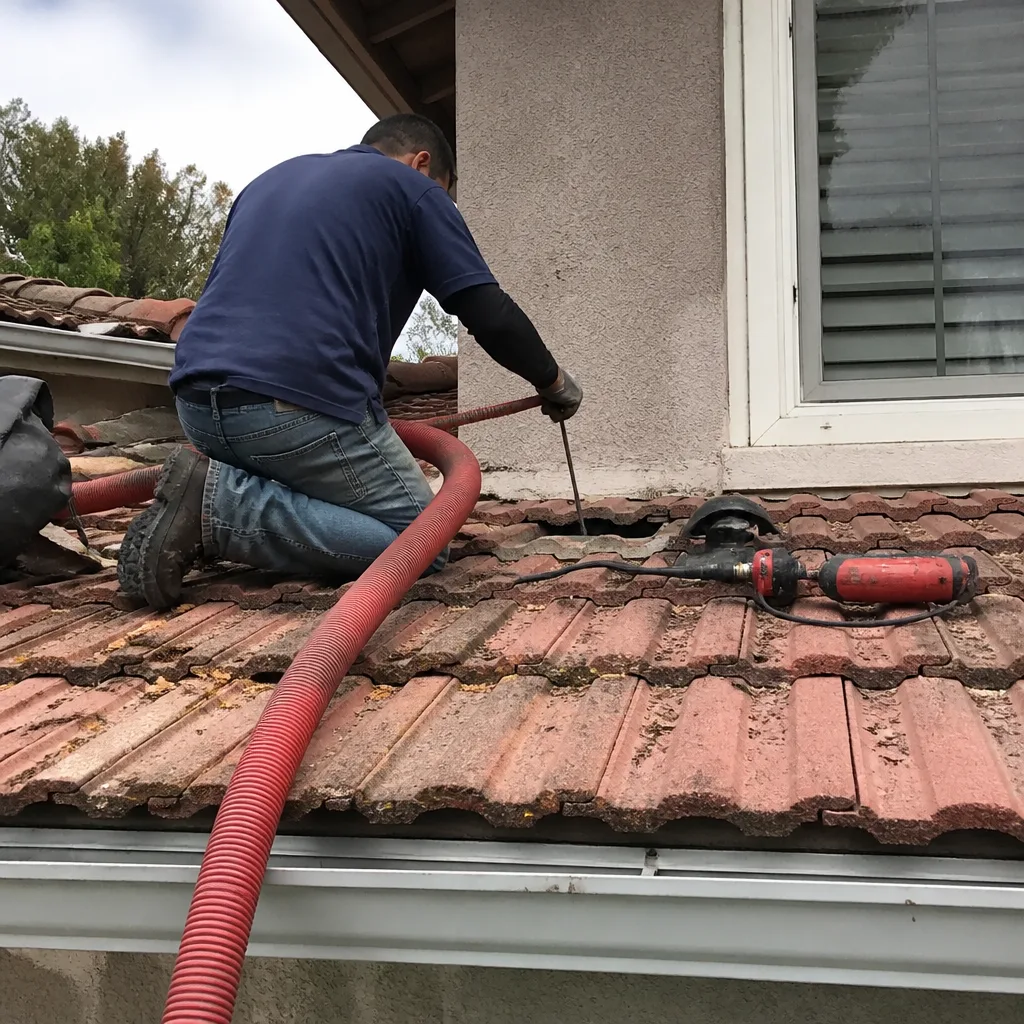
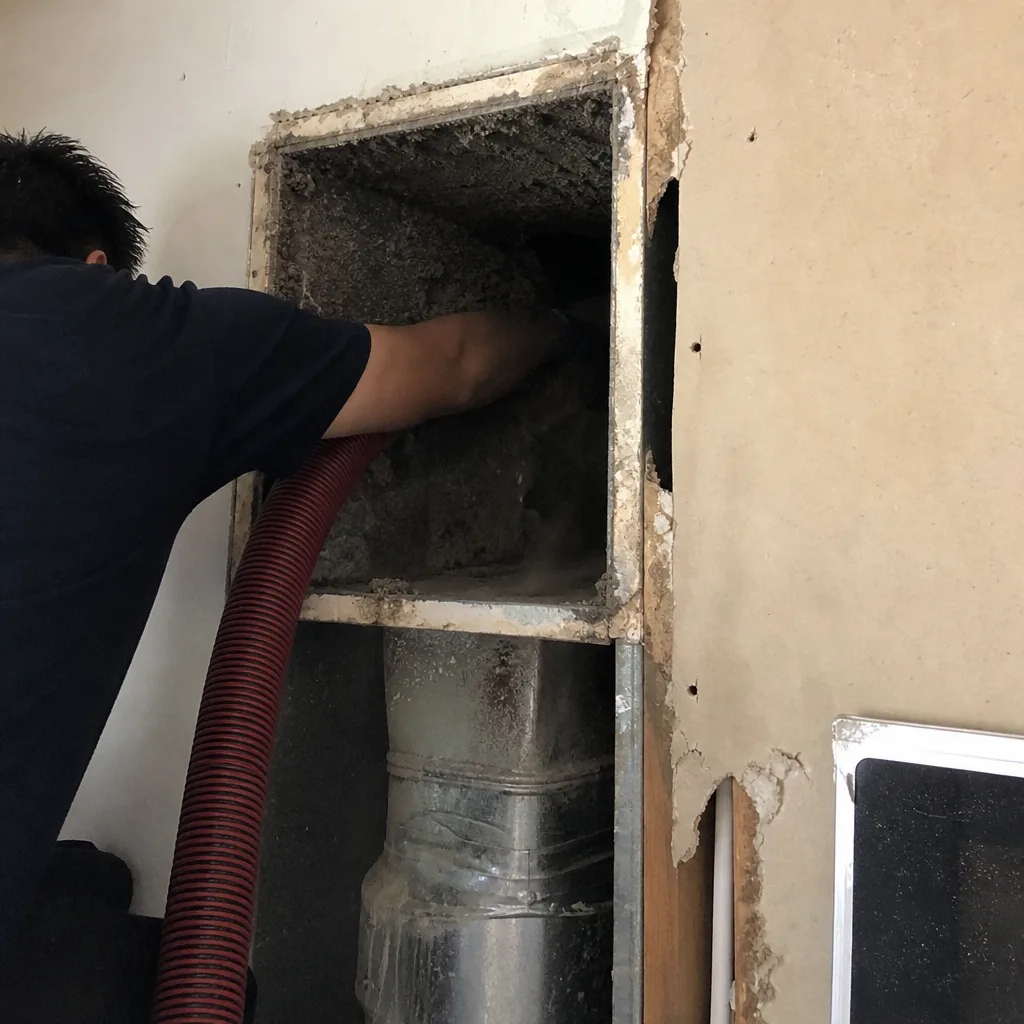
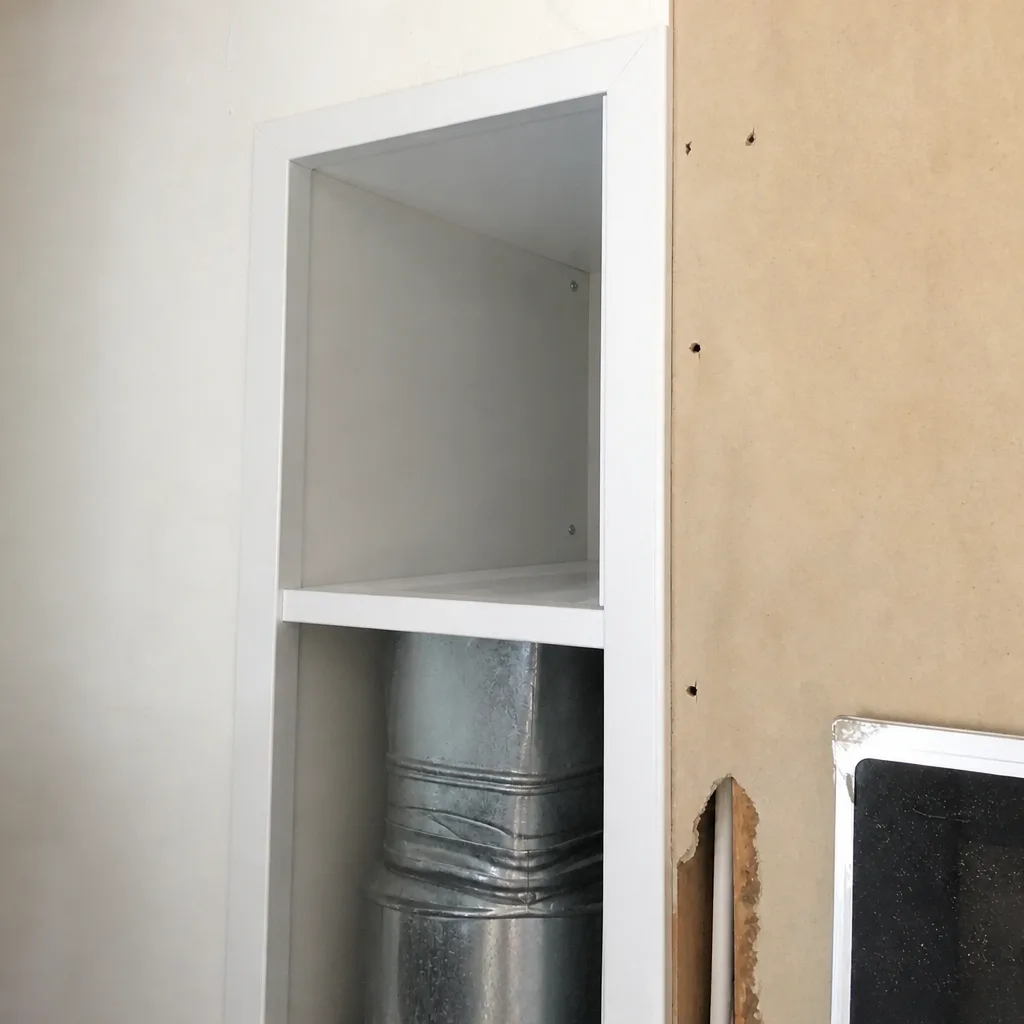
- Verification and before-and-after documentation. Register airflows are confirmed, and before-and-after photos are provided so the homeowner can see what was actually removed and where.
That’s a real half-day or full-day job on a typical Rancho Santa Margarita house. The vacuum step alone is what separates it from anything you could accomplish with equipment from a hardware store or a rental yard.
Common Mistakes to Avoid
- Using a shop vac as if it were a duct cleaning system. As covered above, the airflow is not adequate to depressurize a system, and running agitation without extraction redistributes contamination rather than removing it. This is the single most common DIY error we hear about.
- Blocking registers to “boost suction.” Covering some registers to concentrate vacuum at one point can over-pressurize a branch and damage it. Some duct systems react poorly to restricted airflow, particularly older flex duct. Leave register behavior to the equipment design.
- Skipping the camera on an older flex duct system. In a Rancho Santa Margarita home with decades-old flex duct, aggressive agitation without knowing the duct’s condition can lead to damaged liner or a collapsed run. A camera inspection first is standard practice, and skipping it saves nothing.
- Treating duct cleaning as a standalone job. Cleaning without sealing leaves the gaps and loose joints that let attic air and dust back into the system. The cleaning removes the load, and the sealing keeps it removed.
- Ignoring the dryer vent. Lint buildup in the dryer vent is a fire hazard, and NFPA guidelines flag it clearly. Clearing the lint trap is a two-second task; getting the full vent run cleaned is a separate job that most homeowners put off far too long.
- Choosing the lowest quote without asking what it covers. A teaser-priced “duct cleaning” that takes forty minutes and skips the air handler, camera, and sealing is a different service than a full-system cleaning. The two are not comparable, and the low number is not a discount, it’s a scope difference.
- Assuming a rental extractor is duct-capable. Rental yard staff will often tell a homeowner that a carpet extractor with a hose adapter can do duct work. It can’t. The airflow volume is wrong, the containment design is wrong, and the adapter usually leaks at the register.
See the difference
 Before
 After
 Before
 After
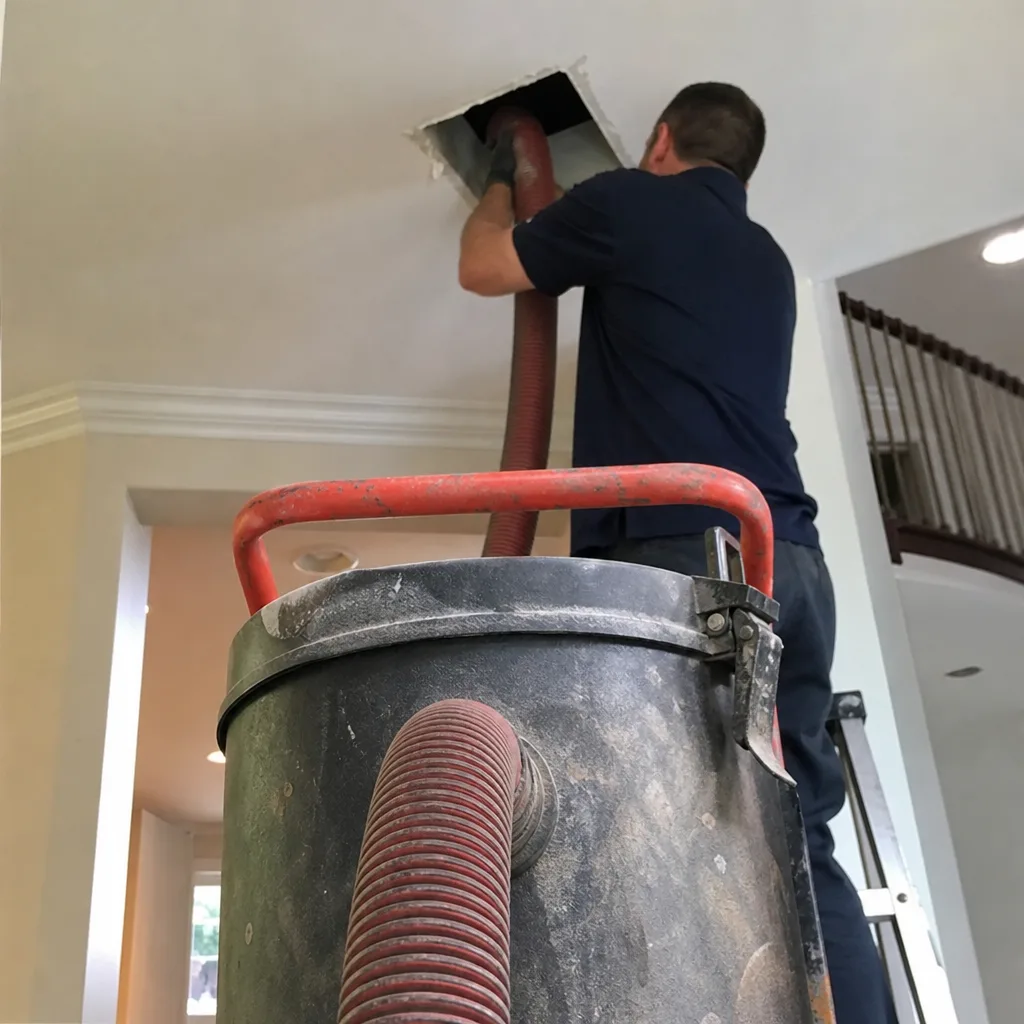 Before
 After
When to Call a Professional
There are a few scenarios where the decision is not really a decision. If anyone in the household has asthma or allergy symptoms that seem worse indoors, if you smell a musty odor when the system first starts up, if you see consistent dust buildup at registers within days of cleaning them, or if you’ve just finished a renovation and drywall dust entered the return, call a professional. On an older Rancho Santa Margarita home with flex duct, a camera inspection is worth doing even before symptoms appear, since liner damage develops quietly. And any dryer vent that isn’t drying loads promptly, or a vent flap that won’t open, should be checked. Rancho Santa Margarita Air Duct Cleaning Pros offers free estimates in Rancho Santa Margarita. Call (877) 792-5932. We answer 24/7. Fast dispatch from 7am to 7pm, Sunday through Friday.
Frequently Asked Questions
No. A shop vac can remove dust from the register and the surface around it, but it cannot depressurize a duct system, and duct cleaning requires sustained negative pressure combined with agitation to actually extract the contamination. Attempting it typically resuspends dust into the living space rather than removing it from the system.
Typical ranges for a whole-house duct cleaning in this market run somewhere in the several-hundred-dollar range for standard homes, with the final figure set by the written estimate after the system is assessed. Homes with older flex duct, multiple systems, or contamination that requires sealing and repair fall at the higher end. Call (877) 792-5932 for an exact quote, and note that estimates are free.
Cheaper quotes usually skip the parts of the job that make it real: negative pressure setup, camera inspection on older duct systems, air handler cleaning, and sealing after cleaning. A low teaser figure that turns into a larger invoice once the technician is on site is the industry’s bait-and-switch pattern, and it’s worth asking specifically what the quote covers before committing. The price should be set per job by the written estimate, agreed before work starts.
Ask for before-and-after photos of the ducts and air handler, and ask which steps were performed (negative pressure setup, camera inspection, agitation, coil cleaning, sealing). A professional cleaning should be documentable and the technician should be able to walk you through what was removed. Requesting photos of your own system, not stock images, is a reasonable ask.
Most homes fall into a roughly three-to-five-year window for a full cleaning, with variations based on pets, allergy concerns, renovation work, and how dirty the return grilles get. Homes in this area’s dusty, dry climate tend to hit the shorter end of that window. Annual register cleaning and filter changes handle the in-between maintenance.
Yes, potentially. Older flex duct in a Rancho Santa Margarita home can have a sagging or cracked inner liner, and aggressive rotary agitation without a prior camera inspection can damage it further or dislodge a compromised run. This is why professional cleaning on a system that’s decades old begins with a camera check rather than a brush.
The Bottom Line
The DIY versus professional question for duct cleaning has an answer, and it’s less about cost than it looks. Register cleaning, filter changes, and lint trap clearing are genuinely yours to handle, and doing them consistently is worthwhile. Full duct cleaning is not, because the mechanism it depends on, sustained negative pressure across the entire system, cannot be produced by consumer or rental equipment. In a Rancho Santa Margarita home with aging flex duct, DIY agitation can actually make air quality worse for several days, and professional cleaning has to start with a camera inspection so the work doesn’t damage the ductwork. Clean ducts plus sealed joints plus a maintained system is the full picture. If you want to know which category your home fits into, Rancho Santa Margarita Air Duct Cleaning Pros offers free estimates in Rancho Santa Margarita. Call (877) 792-5932. We answer 24/7. Fast dispatch from 7am to 7pm, Sunday through Friday. Our technicians have up to 15 years of experience and use commercial-grade equipment from Rotobrush, Nikro, and Abatement Technologies, with Honeywell and Aprilaire products available for whole-home air quality upgrades. Before-and-after photos of your own ducts come with every job.
Written by the team at Rancho Santa Margarita Air Duct Cleaning Pros.