
Last updated November 23, 2026
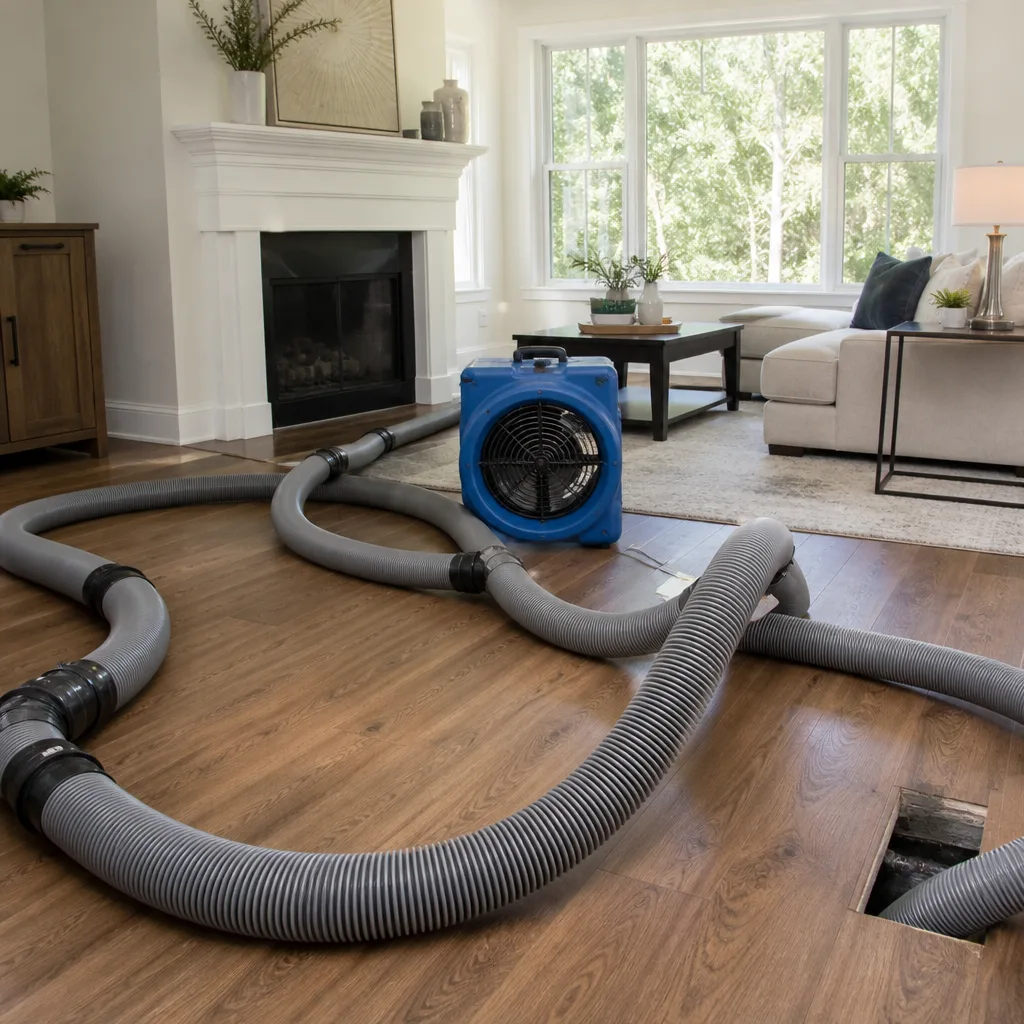 Whole-home duct cleaning
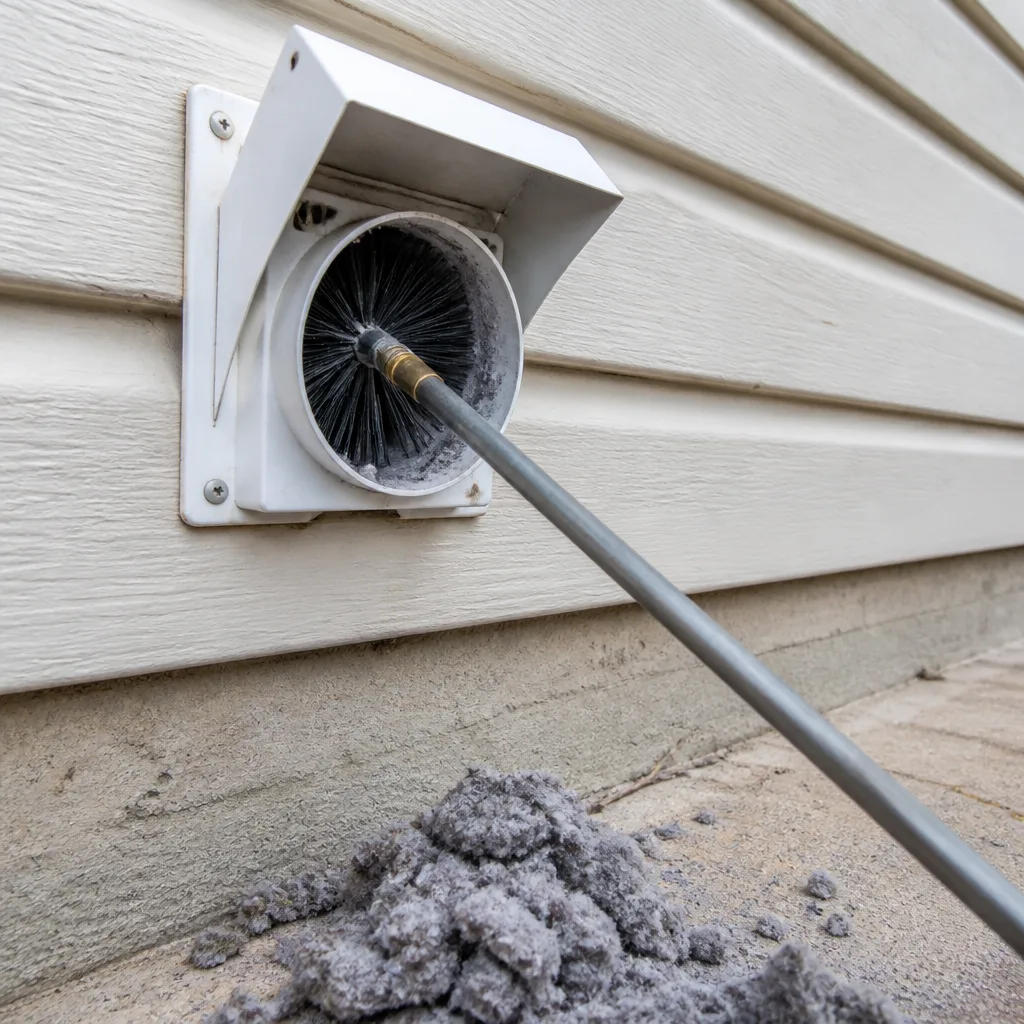 Dryer vent cleaning
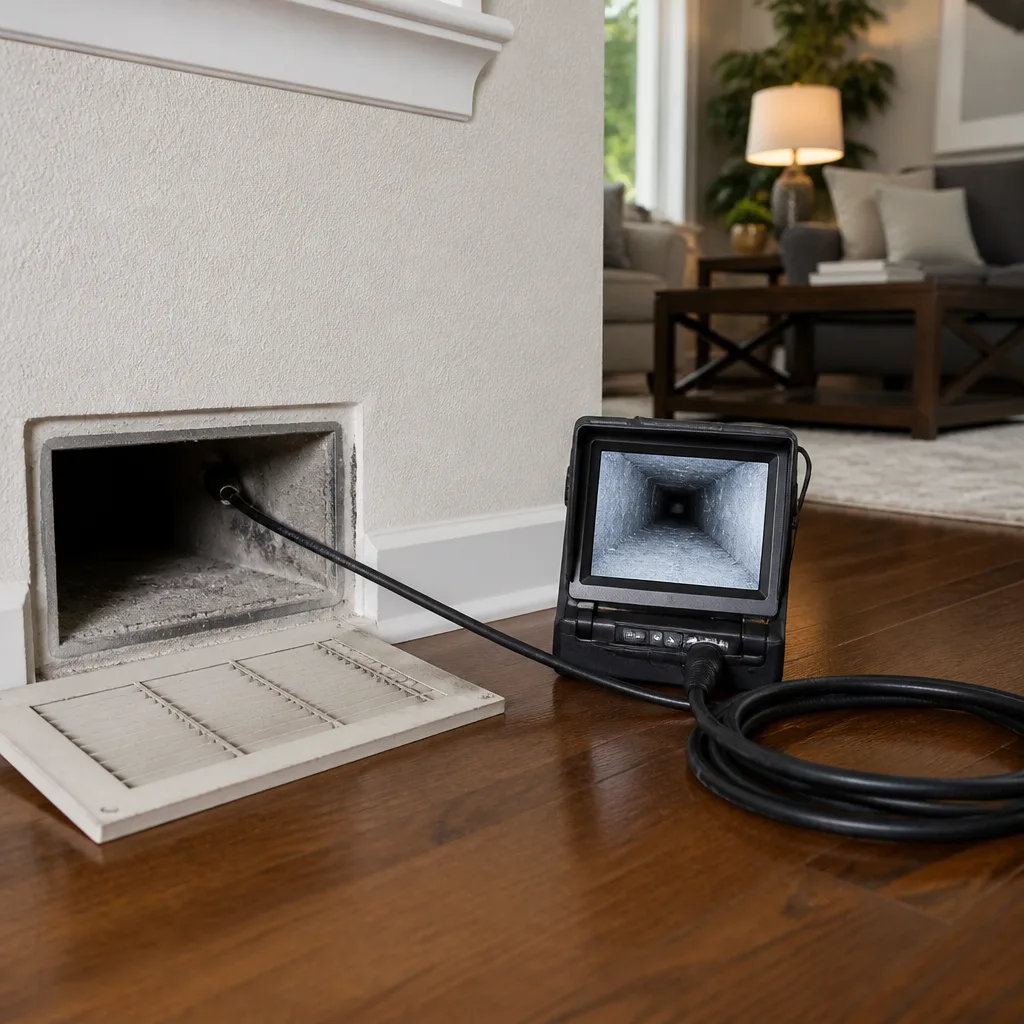 Camera inspection
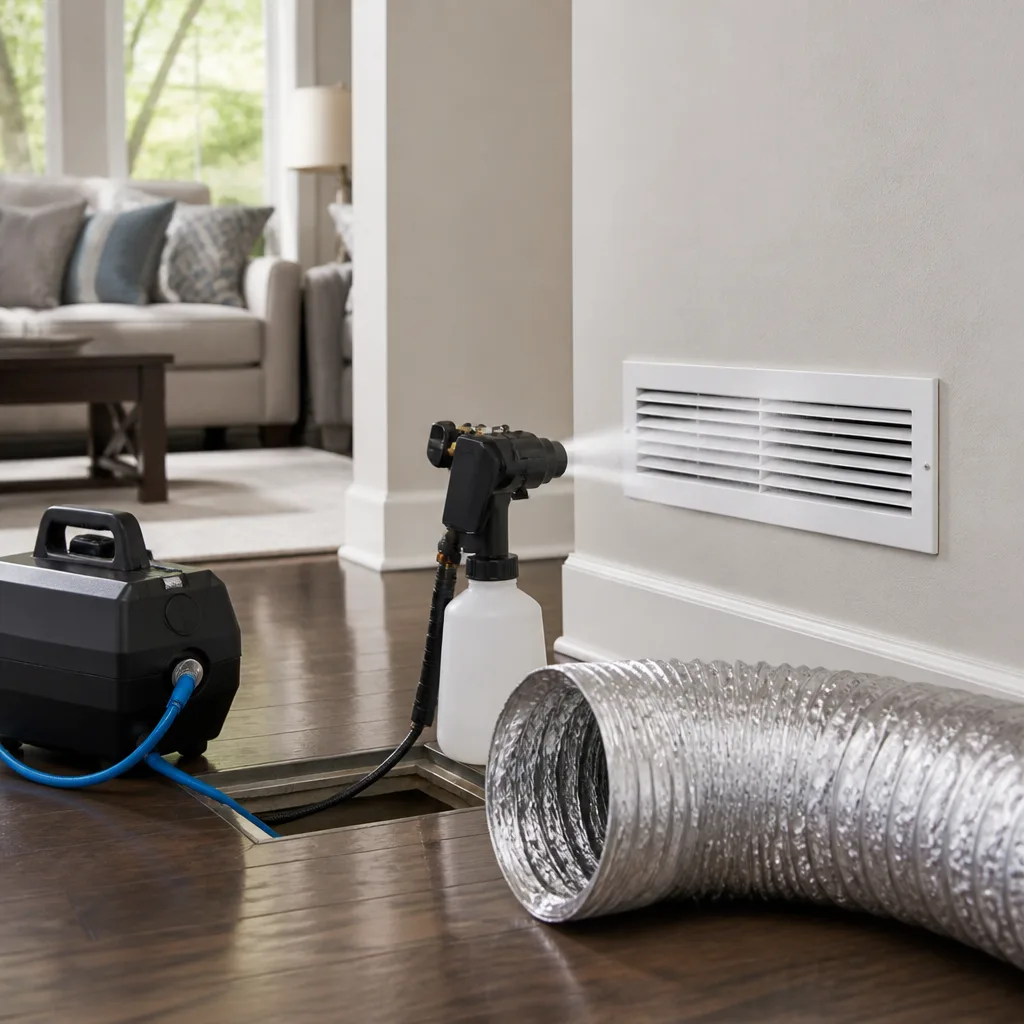 Sanitizing & deodorizing
Whole-system duct and dryer vent check with before-and-after photos - you see exactly what came out of your vents
That "$99 whole-house special" is a bait ad - the real number appears once they are in your hallway, or the "clean" is a shop-vac at the register. We photograph the inside of your ducts before and after instead.
Air Duct Cleaning Warning Signs: A Rancho Santa Margarita Homeowner’s Reference Guide
By the time you can smell mold or see dust pouring from a register, you’ve already missed months of quieter signals. A gradual rise in your SCE bill during a mild month. One room that cools noticeably slower than the rest. A faint musty note that shows up only on first startup and fades before you decide to investigate. Your system was telling you something the whole time. This guide teaches you to read the low-signal warnings – the seven sensory and performance indicators we’ve learned to watch in Rancho Santa Margarita homes, plus the local triggers that don’t show up on generic checklists.
Quick Answer
Air ducts that need cleaning or repair typically announce themselves through subtle performance shifts first: uneven airflow between rooms, a first-startup musty smell, rising energy use in mild months, and dust that returns days after you clean. Visible mold or full airflow loss are late-stage signs. If two or more low-signal indicators are present in a Rancho Santa Margarita home, an inspection is warranted.
Styles & brands we work with
- Whole-home duct cleaning
- Dryer vent cleaning
- Camera inspection
- Sanitizing & deodorizing
Table of Contents
- The Seven Low-Signal Warning Signs
- Two Signs Homeowners Blame on the Wrong Cause
- The Tissue Test: A Simple Airflow Comparison
- Reading Dust Colors and Composition
- Why Your SCE Bill Spikes in Mild Weather
- Rancho Santa Margarita Triggers: Wildfire and Nearby Construction
- When a Sign Isn’t a Duct Problem
- Common Mistakes to Avoid
The Seven Low-Signal Warning Signs
Most homeowners scan for dramatic evidence. What actually shows up first is quiet, measurable, and easy to attribute to something else. Here are the seven indicators we’ve seen prompt a Rancho Santa Margarita system inspection, roughly in order of how early they appear.
- Uneven cooling between rooms. Bedrooms or a home office that once cooled at the same pace as the rest of the house now lag five to ten minutes behind on startup.
- First-startup musty note. A faint, damp smell that shows up in the first sixty seconds after the thermostat kicks on and then fades.
- Dust return speed. Surfaces that used to stay clean for a week now show a visible film in two or three days, even with the same cleaning routine.
- Rising energy use in mild months. Higher kWh readings when the outside temperature hasn’t changed much – a leakage signal addressed below.
- Filter clogging faster than usual. A filter that used to need replacing on schedule is now visibly loaded well before its interval.
- Whistling or rushing at one register. One vent sounds louder than the others, which often means air is being forced past a partial obstruction elsewhere in the run.
- Persistent allergy symptoms in one room. Congestion or eye irritation that seems tied to a specific part of the house rather than the season.
None of these is a smoking gun on its own. Two or more appearing together in the same Rancho Santa Margarita household is the pattern we treat as worth an inspection. If you’re seeing a cluster, our Rancho Santa Margarita Air Duct Cleaning Pros page covers how a full-system evaluation is scoped before any work begins.
Two Signs Homeowners Blame on the Wrong Cause
Two of the seven indicators consistently get misattributed. This is where months are lost, because the wrong fix gets applied and the underlying duct condition stays in place.
The “allergy season” misattribution
Rancho Santa Margarita sits in the foothills south of the 241, and allergy symptoms that appear gradually through spring and fall get chalked up to pollen. Some of that is real. But when congestion follows the thermostat rather than the calendar – worse in the room served by one specific return, better after a filter change – the trigger is inside the system, not in the air outside. The tell is timing. Pollen seasons build and fade on a predictable arc; a duct source shows up whenever that branch of the system runs.
The “appliance getting old” misattribution
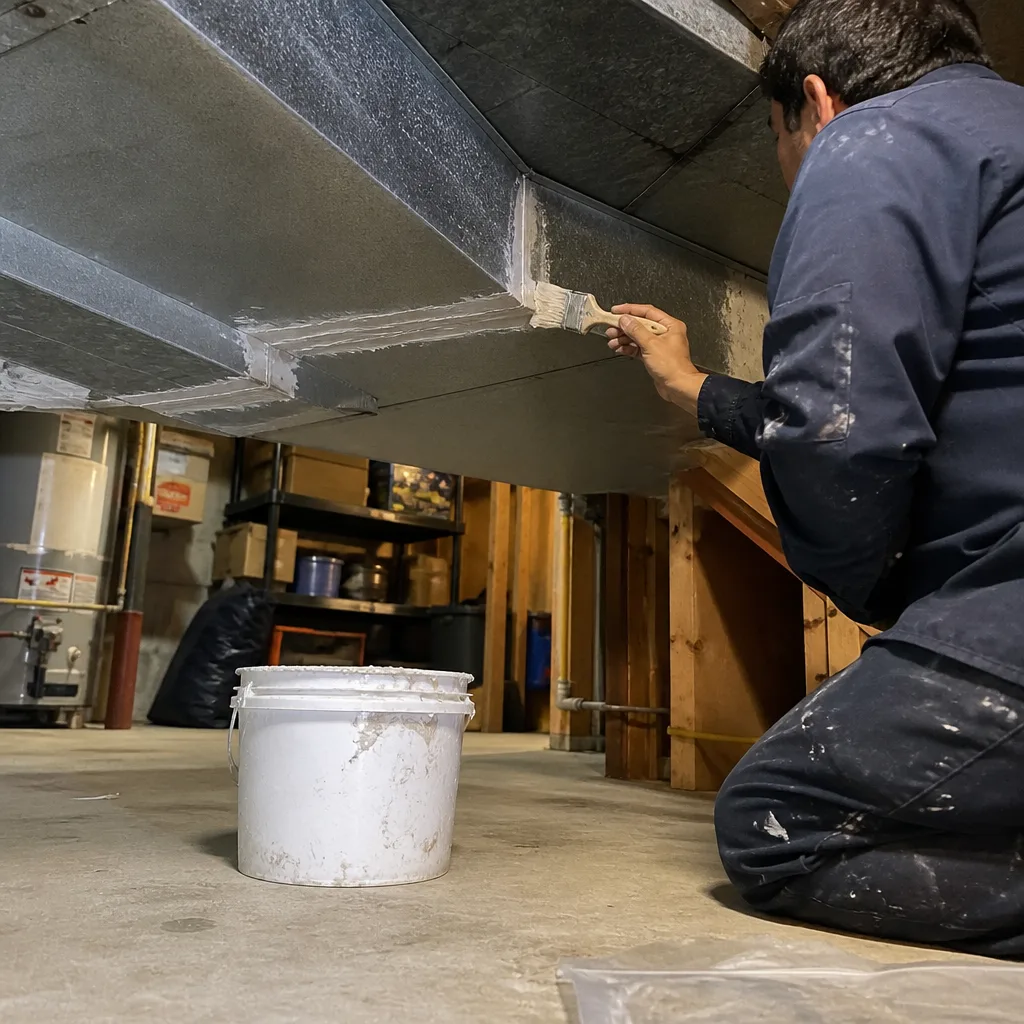
A sudden jump in the SCE bill gets blamed on the air conditioner or water heater. But an appliance failing usually produces other symptoms – short cycling, a compressor that runs longer, a hot-water tank that can’t keep up. Rising energy use with no appliance behavior change and no weather explanation points more often at air escaping from the duct system before it reaches a room. That’s a sealing issue, not a hardware replacement issue. Wrapping the ducts in the attic with professional-grade materials and checking every joint in the trunk line is the fix, and it’s a job for a technician who knows where leaks hide.
The Tissue Test: A Simple Airflow Comparison
You don’t need instruments to compare airflow across registers. A single sheet of tissue and five minutes of your time will show you whether one branch of the system is being starved. This is the test we ask homeowners in Rancho Santa Margarita to run before they call, because it narrows the diagnosis before anyone arrives.
- Turn the system to fan-only so the air handler runs without heating or cooling.
- Hold a single-ply tissue flat against the face of a supply register. Note how strongly and how steadily it’s held.
- Move to every other supply register in the house and repeat with the same tissue.
- Note any register where the tissue droops, flutters, or barely stays up.
- Repeat at each return register; the draw should feel similar at each.
- Write down which rooms show weak flow.
A single weak register usually means a blocked or partially collapsed run serving that room. A cluster of weak registers on one side of the house points at a larger obstruction or a disconnected duct in the attic. This is when HVAC cleaning and a duct inspection work together, since the coil and air handler need to be checked alongside the runs. If the pattern shifts with fan speed – strong at high, weak at low on the same register – the diagnosis points at the blower or a damper rather than the ducts themselves.
Reading Dust Colors and Composition
Dust you can actually see on a register is a data point, not just a cleaning task. The color and texture tell you what kind of contamination is circulating and roughly where it came from. This is one of the low-signal reads most homeowners skip.
- Light gray, uniformly fine: normal household dust being recirculated. Usually a sign the filter is doing its job but the return side needs attention.
- Dark gray or black, slightly tacky: often humid air mixing with fine particulates; frequently accompanies a musty startup note. Worth a closer look at the coil and any damp insulation.
- Brownish or rust-toned: typically mineral dust pulled from attic insulation or rust from older metal duct components. Common in homes on the warm slope of the hills above Rancho Santa Margarita with attic equipment.
- Reddish or orange-tinted film: correlated with wildfire-season particulate settling, discussed below.
- White or powdery: sometimes drywall dust left in the system after renovation work, and sometimes mineral residue on the coil fins.
Composition matters as much as color. Gritty deposits that leave a paper-like residue on a damp rag are usually construction or insulation dust. Sticky deposits that smear rather than crumble point to biological contamination, and that’s when sanitizing and the deeper evaluation we do with Abatement Technologies equipment belong in the scope. If you see visible mold growing around a register or on duct surfaces in the attic, stop running the system in that zone and have it inspected before you use the space again. Mold spores circulating through a home should be handled by a professional, not a shop vac.
Why Your SCE Bill Spikes in Mild Weather
A spike in your Southern California Edison bill during a mild-weather month, with no appliance change and no unusual thermostat use, often points at air leakage in the duct system rather than a failing unit. Here’s why. The air handler is moving the same volume of air it always has, but a percentage of that air is escaping through loose joints, disconnected runs, or a failed boot connection before it reaches a room. The system runs longer to satisfy the thermostat. kWh goes up, room comfort goes down, and no appliance is at fault.
Reading the pattern
The leakage signal is strongest when the bill climbs but the house doesn’t feel cold or hot at the thermostat. That disconnect – the thermostat satisfied, the actual rooms not – is the diagnostic. A failing compressor won’t produce that pattern. A failing water heater won’t either. A leaking duct will.
Where leaks hide in RSM homes
In the tract and hillside homes throughout Dove Canyon, Robinson Ranch, and the neighborhoods off Antonio Parkway, attic duct runs pass through unconditioned space. Every joint in that run is a potential leak, and even a modest loss at each joint adds up across a whole house. Duct repair and sealing is the fix, and it’s a job that should be done alongside cleaning rather than as a separate visit – you don’t want to seal dust and debris behind the seal. When the duct system is evaluated, we also bring Rotobrush and Nikro equipment so the cleaning and the sealing happen on the same coordinated scope. If your bill is climbing and you’ve ruled out the appliances, that’s a call worth making. Dial (877) 792-5932 for a free estimate.
Rancho Santa Margarita Triggers: Wildfire and Nearby Construction
Two local conditions make a duct system work harder than its counterparts elsewhere in Orange County. Neither shows up on a generic national checklist, and both start quietly.
Wildfire season
Santa Ana wind events and nearby fire activity push fine ash and smoke particulate into the outdoor air for days at a time. Your return vents draw that air through the system whether it’s a scheduled filter change or not, and much of it settles on duct surfaces, the blower wheel, and the air handler coil. The indicator isn’t usually visible – it’s the faint smoke smell that lingers in the house well after the outside air has cleared, or heightened allergy symptoms in the days following an event. Homes with attic equipment and older duct runs accumulate it faster. A post-event evaluation with Abatement Technologies equipment is warranted when a Rancho Santa Margarita household notices the smell persisting past a week.
Construction and grading
Ongoing development and grading activity in the surrounding foothills generates fine drywall and soil dust that finds its way into intake air. The tell is a filter that loads visibly faster than its usual interval, and a gritty film on register faces that wipes away and comes right back. If your home is near an active build site, expect the interval between cleanings to shorten. It’s not that your system suddenly got dirtier; it’s that the air it draws got more loaded.
In both cases, the fix is a full-system clean and a check that the duct system is sealed well enough to keep the next round of particulate out. We also work with Honeywell and Aprilaire filtration components when upgrades make sense, since a better filter upstream reduces what reaches the duct surfaces. That’s part of the same conversation, not a separate one.
When a Sign Isn’t a Duct Problem
Not every warning sign points at the ducts. Knowing what to rule out first saves you a call and points you at the right fix faster. These are the ones we see most often in Rancho Santa Margarita.
- Hot room on the west side of the house in late afternoon: often a solar gain issue rather than an airflow issue. Shade, window film, or a zoned thermostat solve more of it than duct work will.
- Persistent musty smell in a bathroom or laundry: check the exhaust fan first. If the fan moves little air, the moisture stays in the room, and no amount of duct cleaning fixes it.
- Lingering smell in the laundry area after drying clothes: this one is almost never the supply ducts. It’s a dryer vent issue and a fire-safety concern worth addressing on its own. Our dryer vent cleaning page covers that scope.
- A single room that never cools, regardless of airflow: sometimes it’s a damper stuck closed, sometimes a poorly sized run. Both get diagnosed in the same visit as the duct inspection.
- Occasional dust visible only when sunlight hits a register at the right angle: normal. Dust in the air is a fact of life; dust that settles fast enough to film a surface is the signal.
We’d rather clear six of these for you and tell you the seventh is real than quote a job you don’t need. The free estimate exists for exactly that reason.
Common Mistakes to Avoid
- Treating a strong quote as a thorough job. A cheap bid that skips the blower wheel, coil, and return side isn’t cheap; it’s incomplete. Insist on a written scope that names every component before you compare prices.
- Running the system through the dust during cleanup. If you’re doing renovation work or the ducts have visible debris, keep the system off until the debris source is removed. Running the fan recirculates what you’re trying to get rid of.
- Assuming the filter handles everything. A high-efficiency filter catches some particulate, but it doesn’t remove what’s already settled on the ducts or on the blower wheel. Upstream filtration is a preventative measure, not a cleaning service.
- Skipping the assess-and-seal step. Clean ducts with unsealed joints recontaminate faster. In Rancho Santa Margarita homes with attic equipment, the seal is often the bigger win.
- Ignoring the dryer vent as a separate system. It’s a recognized fire-prevention item per NFPA guidelines, and it’s not part of the supply duct run. It needs its own scope and its own inspection.
- Forgetting to check the air handler coil and blower. Coil fouling looks like a duct problem because the symptoms are identical. Ask any provider whether the coil and blower are in the quote.
- Trusting a single low-signal symptom over time. One symptom is a data point. A pattern across months is a diagnosis. Note the timing and bring it to the estimate.
See the difference
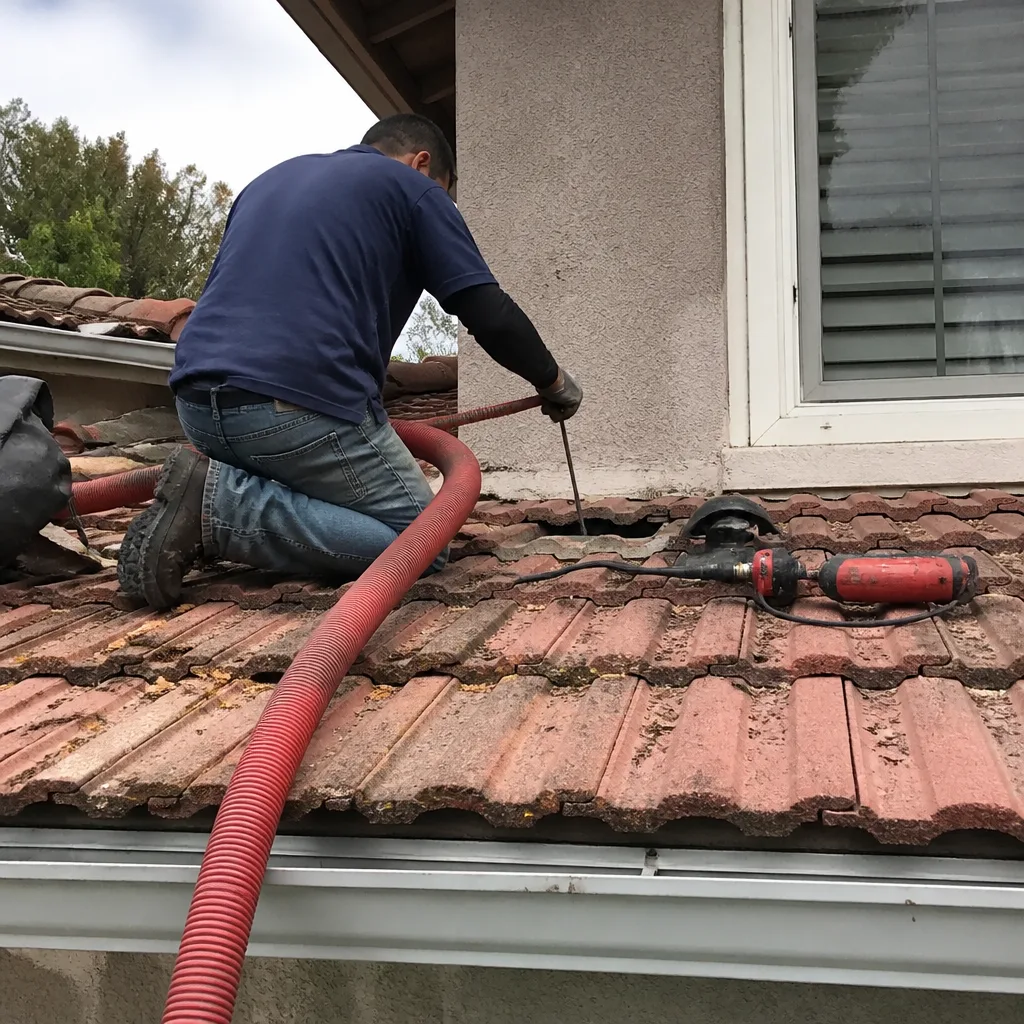 Before
 After
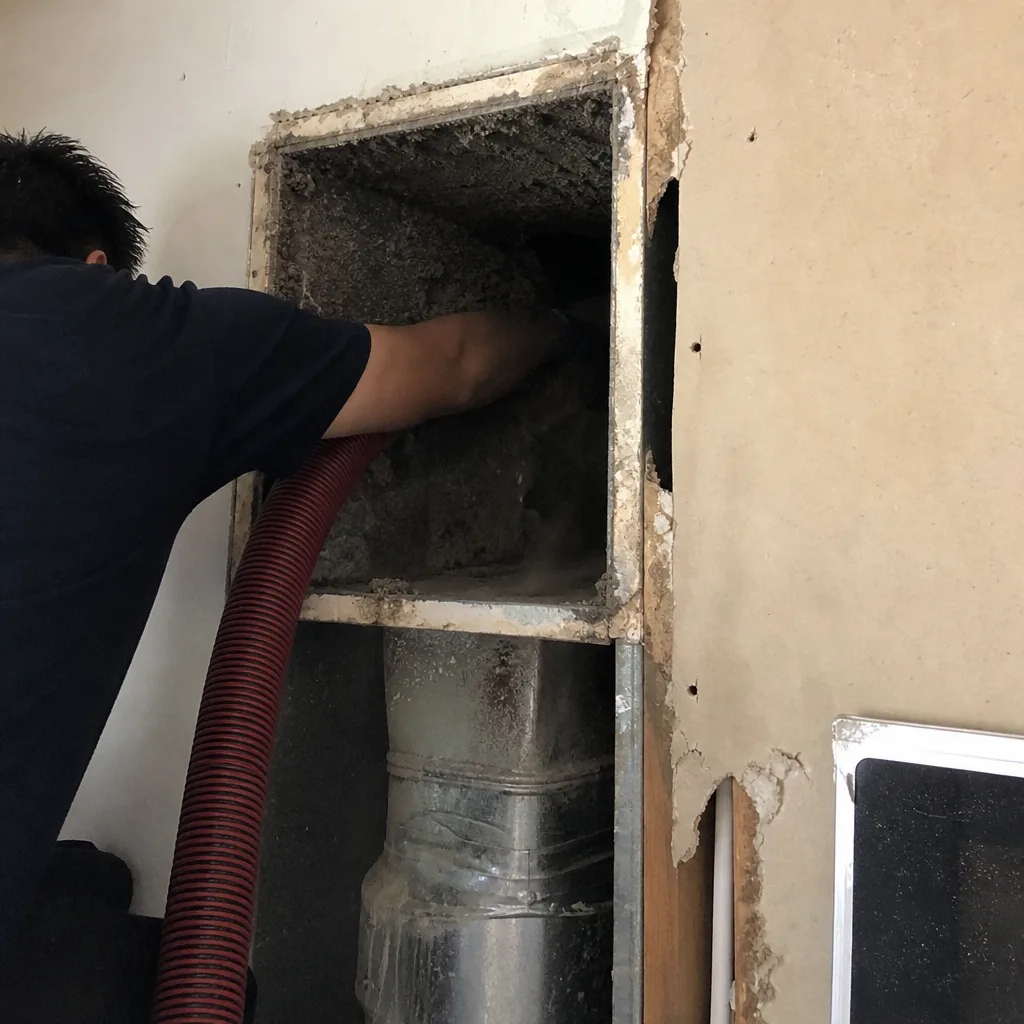 Before
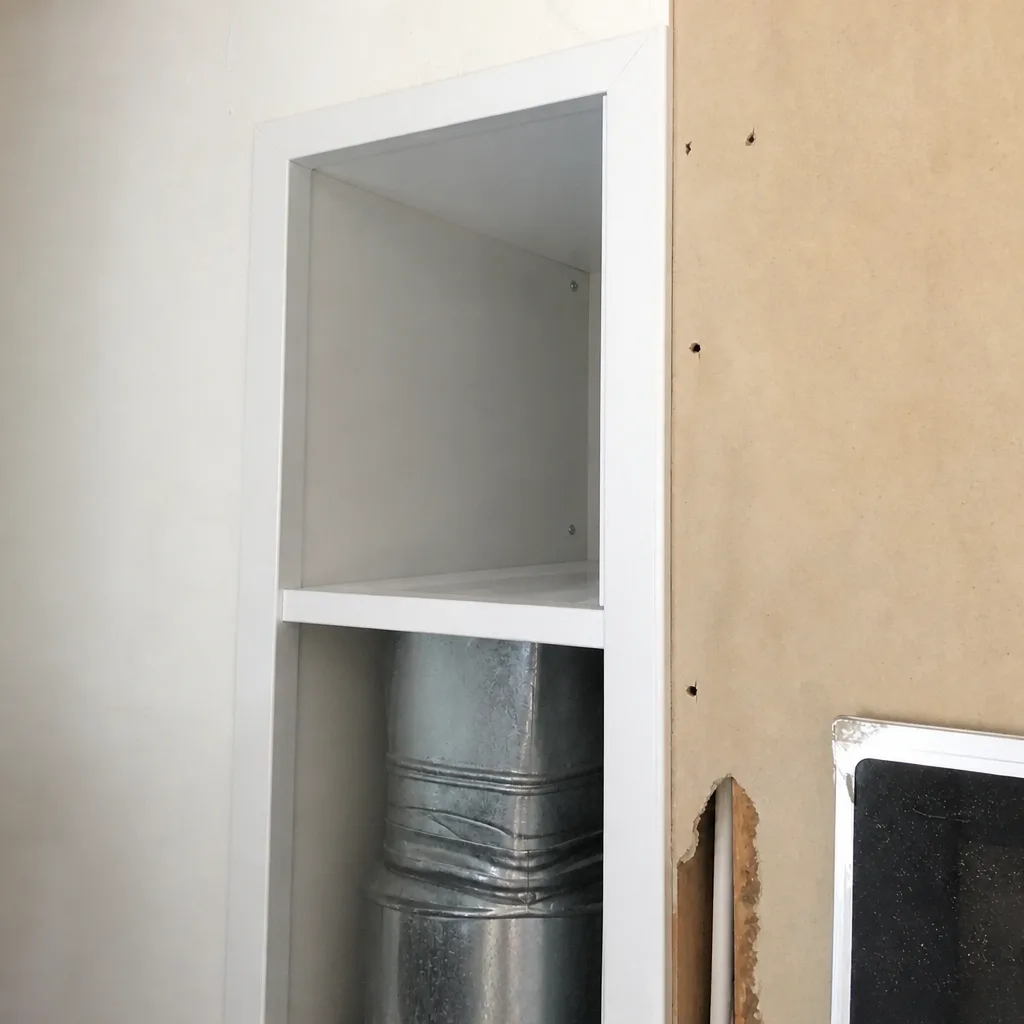 After
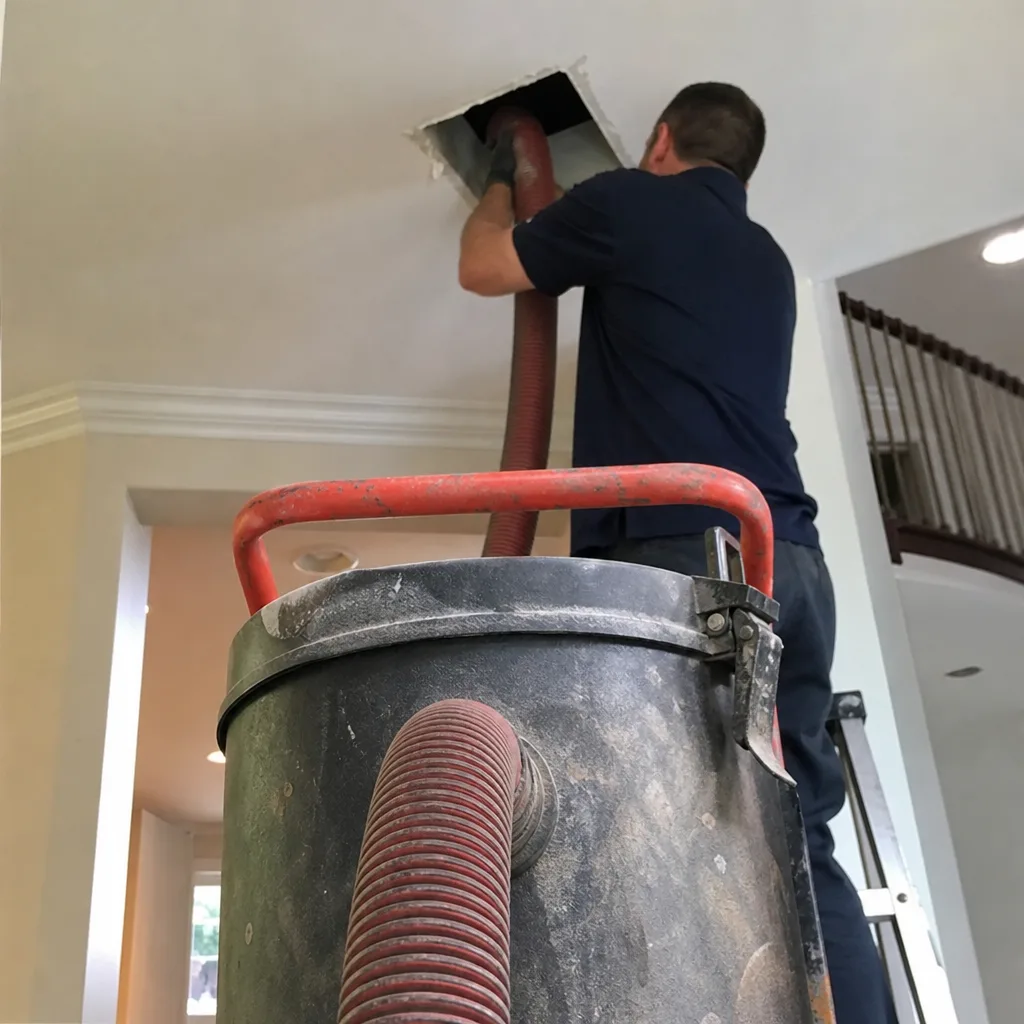 Before
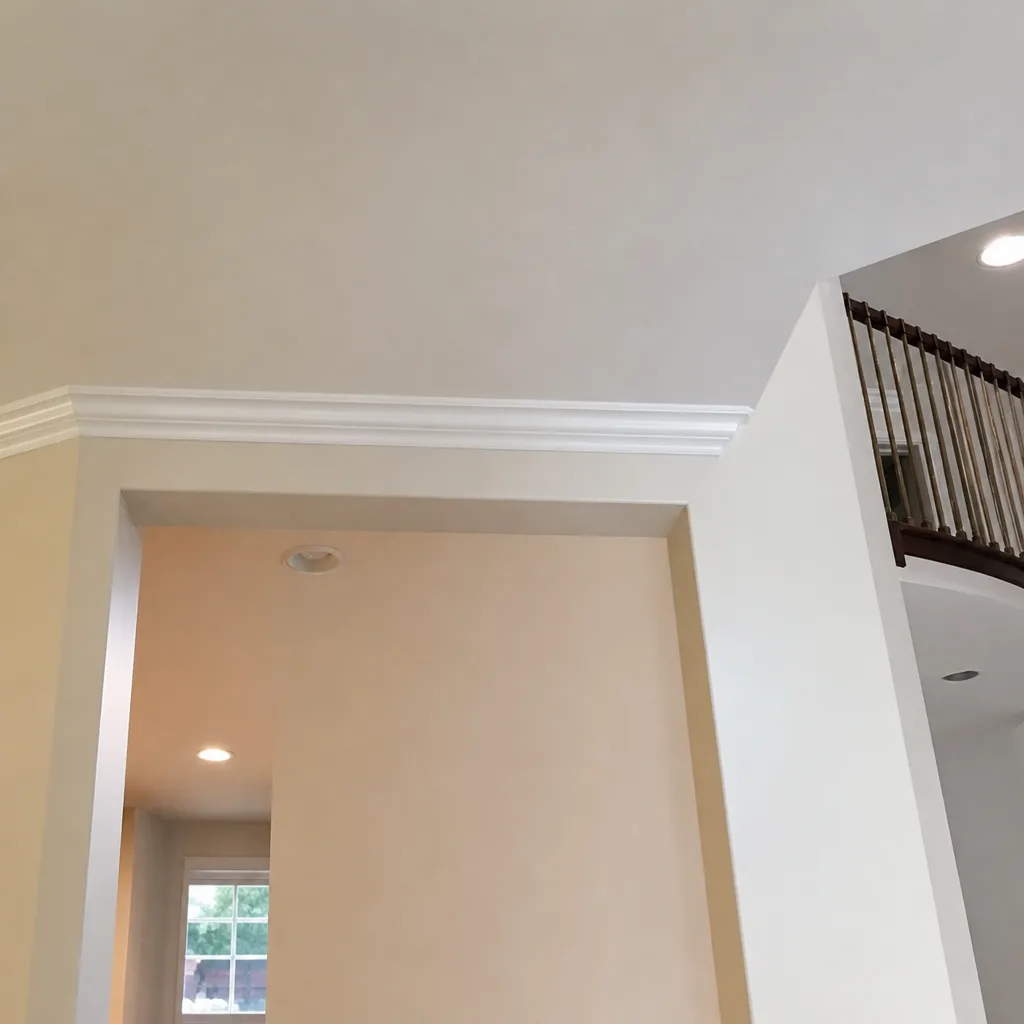 After
When to Call a Professional
Call when two or more low-signal indicators appear together, when you can see or smell mold around registers, when your SCE bill climbs in mild weather with no appliance change, or when the tissue test shows a clear pattern of weak registers. Also call after a fire event if the smoke smell lingers more than a week, and after any renovation that generated dust in the living space. Rancho Santa Margarita Air Duct Cleaning Pros offers free estimates in Rancho Santa Margarita – call (877) 792-5932. We answer 24/7. Fast dispatch from 7am to 7pm, Sunday through Friday. Every job is quoted as one flat price per system before work starts, so there’s no coupon-vs-invoice surprise – just a written scope, a before-and-after photo set of your own ducts, and a job done with the same Rotobrush and Nikro equipment commercial contractors use.
Frequently Asked Questions
A gradual rise in the SCE bill during a mild-weather month. Homeowners scan for a smoke smell or visible mold, which are late-stage signals, and skip the bill pattern, which is an early leakage indicator. If the bill is up and no appliance has changed, that’s worth a call.
For most Rancho Santa Margarita homes, a full-system cleaning every few years is reasonable – sooner if you live near active construction, have pets, or have experienced a smoke event. The honest answer is that the interval depends on your filters, your surrounding air, and whether the system is sealed. Any provider quoting a fixed schedule regardless of conditions is guessing.
Because they’re quoting a smaller job. A low bid often skips the blower wheel, the coil, the return side, and the sealing – the parts that actually take time. The invoice is smaller because the scope is smaller, not because the same work is being done for less. Insist on a written, itemized scope before you compare prices.
Ask for before-and-after photos of your own ducts, and for a written scope naming each component cleaned. Those are the two things we insist on with every job. If a provider won’t show you photos, that’s a signal too.
Yes, though the exact difference depends on the system, square footage, and whether repair and sealing are included. Our quote is one flat price per system, agreed before work starts, so you’ll see the difference up front rather than discovering it on the invoice. Call (877) 792-5932 for a free estimate.
Yes. Airborne particles from the ducts circulate through every room, and a single contaminated return can affect the whole house. A pattern of allergy symptoms that follows the thermostat rather than the seasons is the sign to watch. When you call, describe which rooms are worst – that’s the first useful diagnostic.
The Bottom Line
Your duct system tells you what’s wrong long before the symptoms become dramatic. The early signs are quiet – a lag between rooms, a first-startup smell, a filter that loads too fast, a bill that climbs in mild weather. Learn to read those, run the tissue test when something feels off, and note the dust colors on your registers. In Rancho Santa Margarita, wildfire-season particulate and nearby construction add specific triggers worth watching. When two or more signs line up, have the system inspected, get a written scope, and ask for before-and-after photos. Cleaner air starts at the source, and your system has been telling you where to look. Call (877) 792-5932 for a free estimate. We answer 24/7. Fast dispatch from 7am to 7pm, Sunday through Friday. You can also read more about whole-home air duct cleaning and how we stage a full-system job.
Written by the team at Rancho Santa Margarita Air Duct Cleaning Pros.