
Last updated November 23, 2026
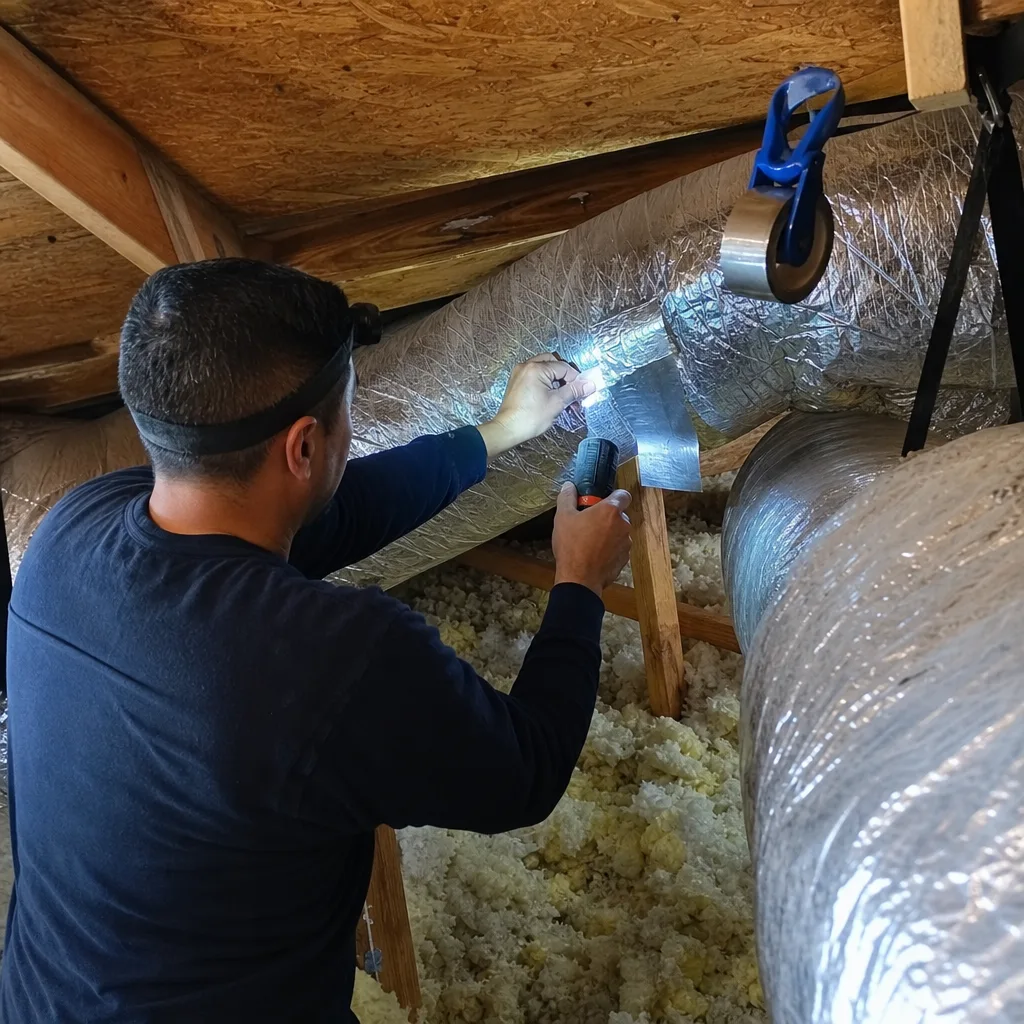
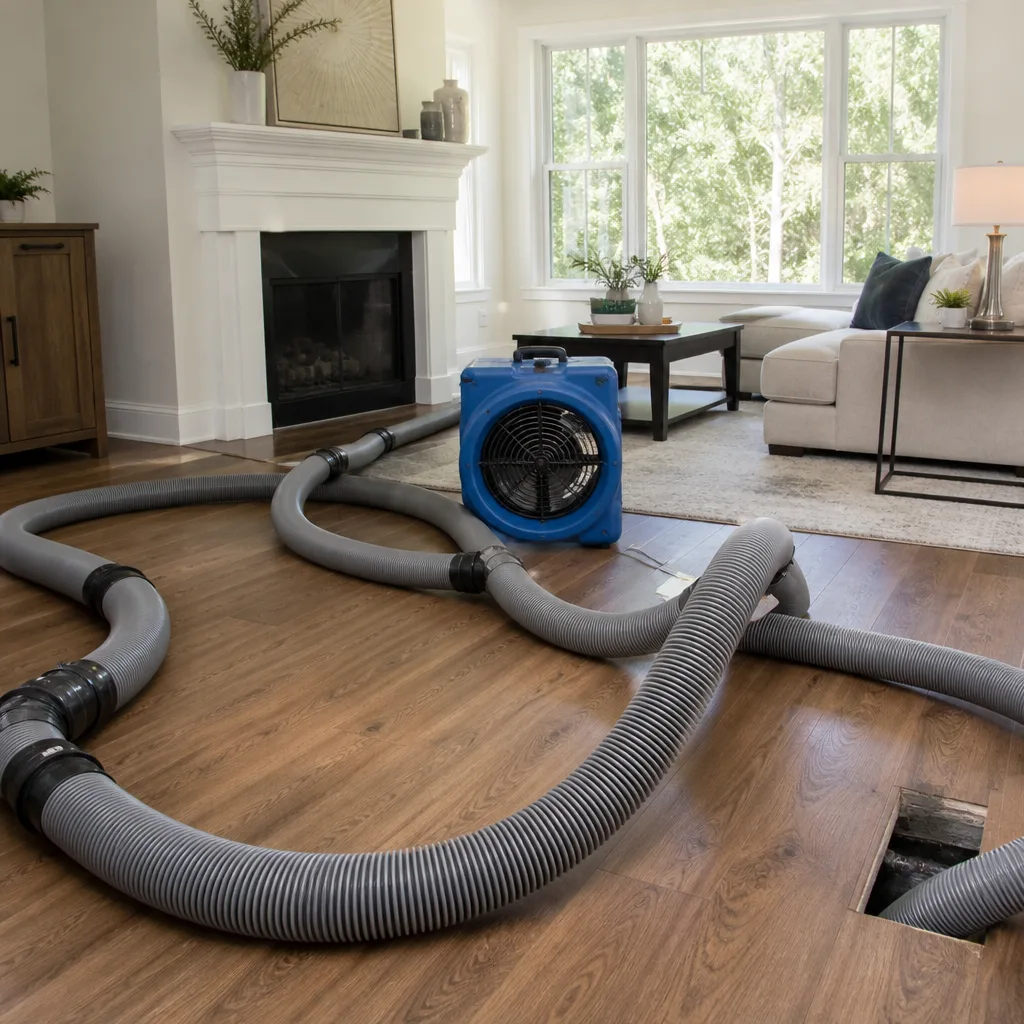 Whole-home duct cleaning
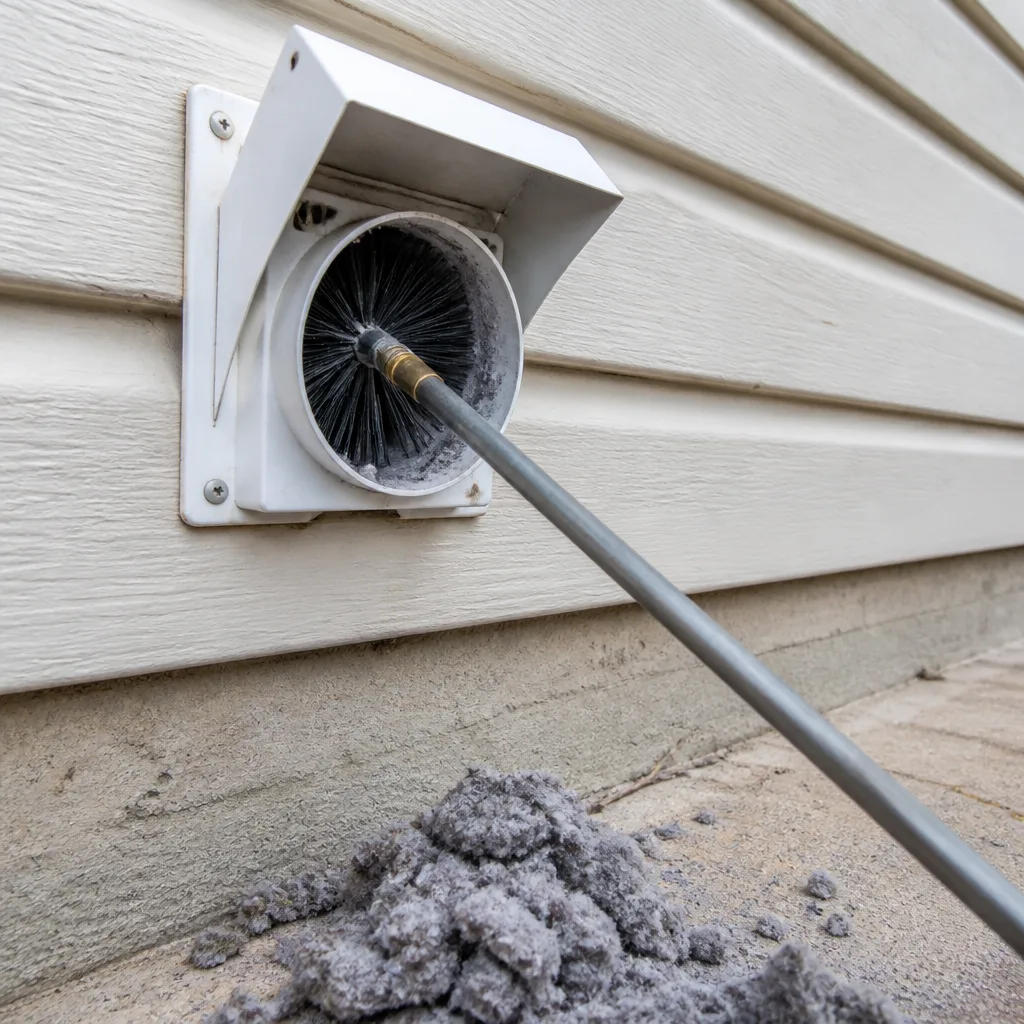 Dryer vent cleaning
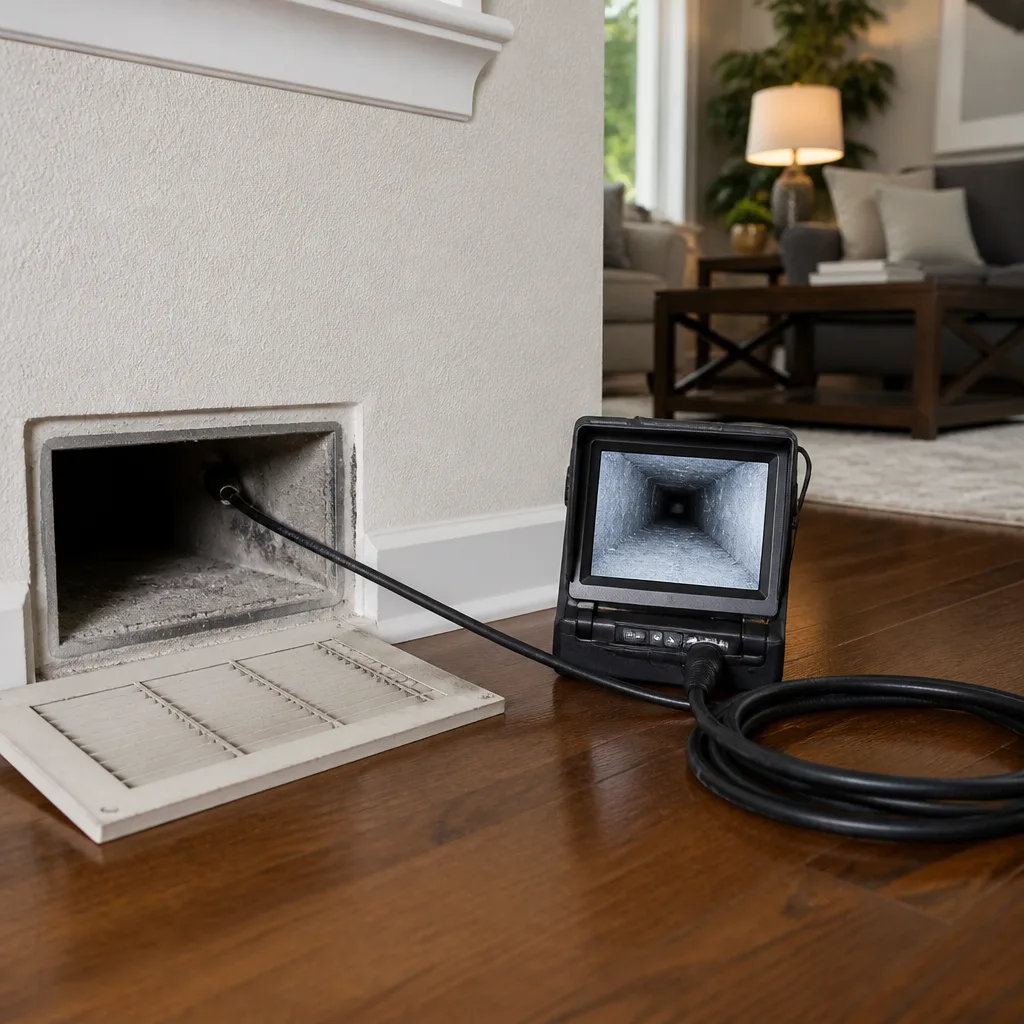 Camera inspection
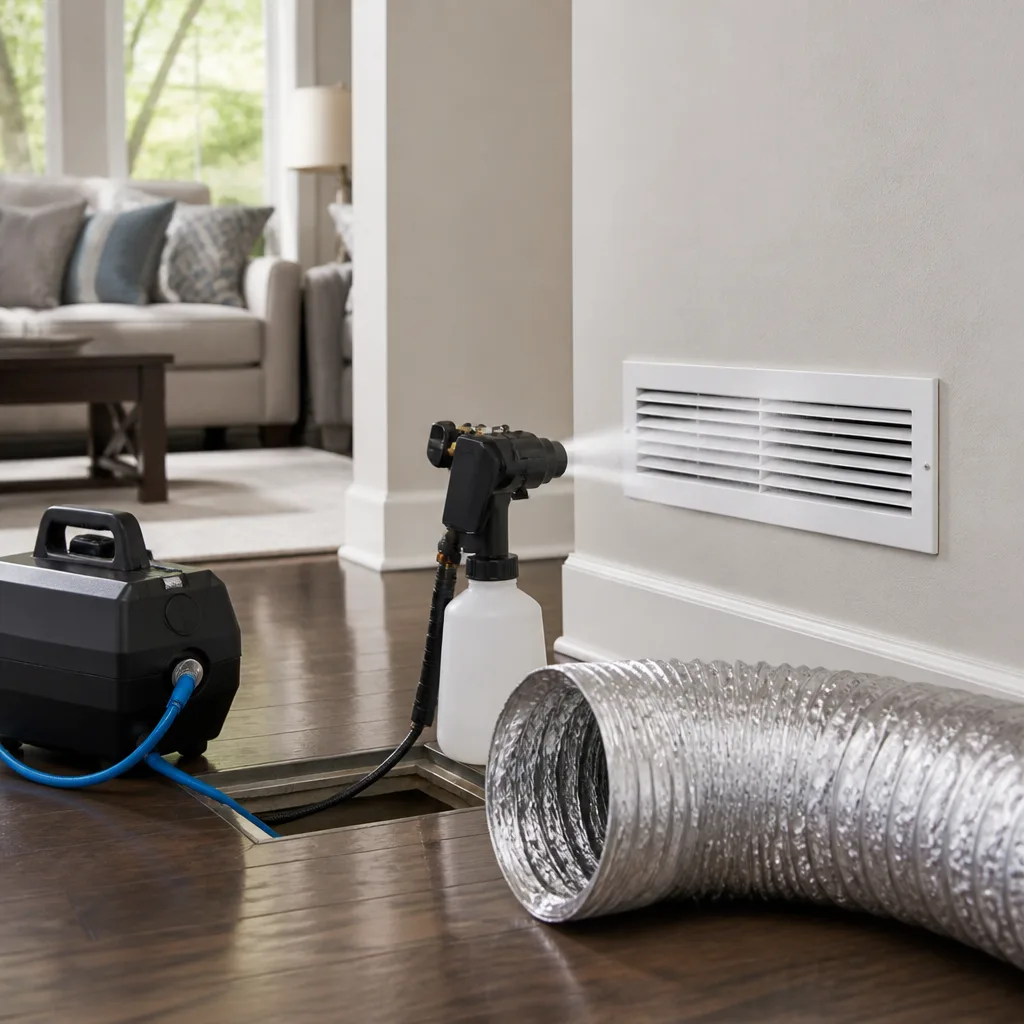 Sanitizing & deodorizing
Whole-system duct and dryer vent check with before-and-after photos - you see exactly what came out of your vents
That "$99 whole-house special" is a bait ad - the real number appears once they are in your hallway, or the "clean" is a shop-vac at the register. We photograph the inside of your ducts before and after instead.
Air Duct Cleaning Maintenance Checklist for Rancho Santa Margarita Homeowners
Most homeowners in Rancho Santa Margarita have been told to clean their ducts every three to five years. That number isn’t wrong, but it’s useless on its own. It says nothing about what to look for between cleanings, what early trouble looks like in a specific system, or how to keep a record that protects your home’s resale value when you eventually sell. Duct maintenance isn’t an appointment you book and forget. It’s a short list of checkpoints you can see, smell, measure and write down. This guide gives you that list, task by task, tied to the actual components in a typical Rancho Santa Margarita home, so you know what to watch and when to act.
Quick Answer
A practical duct maintenance checklist for a Rancho Santa Margarita home runs on three cycles: monthly filter and return-vent checks, quarterly inspections of accessible duct runs and dryer vent airflow, and a professional cleaning of the full system roughly every three to five years. The schedule matters less than the checkpoints. At each cycle you confirm one of three outcomes – clear, clear with a note, or call a professional – and you record what you found.
Styles & brands we work with
- Whole-home duct cleaning
- Dryer vent cleaning
- Camera inspection
- Sanitizing & deodorizing
Table of Contents
- Monthly Checkpoints: Filters, Vents and Airflow
- Quarterly Inspections: Duct Runs, Flex Connections and Plenums
- The Annual Deep Review: What to Schedule and When
- Choosing the Right MERV Rating for RSM Air
- Dryer Vent Maintenance: The Most Skipped Task
- What to Document After Every Cleaning
- Building a Record That Helps at Resale
- Adjusting the Checklist Through the Year
Monthly Checkpoints: Filters, Vents and Airflow
Assuming you own the plan would defeat the point of the plan. A checklist is only useful if it’s short enough that you actually do it. The monthly cycle is the shortest and the most reliable: three items, done in fifteen minutes, that catch the early warning signs before they turn into expensive air duct cleaning or repair work.
Here’s what to do on the first cycle of each month:
- Filter check. Slide the filter out and hold it up to a light. If you can’t see light coming through the media clearly, it’s done. Hold it a moment longer than feels natural – most homeowners replace too late, not too early.
- Return-vent visual. Look at each return grille for visible dust trails, lint, or dark edges where dirt has been pulled past the grille face. A grille face with a sharp dust outline is telling you air is being drawn through something it shouldn’t be. Note the vent and move on.
- Airflow at supply registers. With the system running, hold a thin tissue against a few supply registers. It should flap steadily. Compare registers against each other. A register that’s noticeably weaker than its neighbors is a data point worth writing down.
The pass/fail is simple. A clear filter, clean grilles and consistent airflow across registers means pass. A dirty filter is a replace. A sharp dust outline at one return, or a noticeably weak register, is a note – log it, and watch it next month before deciding to call. Three notes on the same vent mean the system is telling you something, and it’s usually worth a professional look, which is where a full air duct cleaning assessment starts.
Here in Rancho Santa Margarita, monthly checks matter more than in many places because our homes run the HVAC system heavily across a long cooling season. The system moves more air, so it collects more dust. A filter that would last three months in a mild climate may need a look every four to six weeks here.
Quarterly Inspections: Duct Runs, Flex Connections and Plenums
Quarterly checks go deeper, but they stay within what you can see without specialized tools. You aren’t disassembling ductwork. You’re looking at the parts every homeowner can reach – the grilles, the visible flex duct in the attic or crawlspace, and the return air plenum near the air handler.
What to look for on accessible duct sections
Fluorescent light does more than a phone flashlight here. Rake a small trouble light along the visible duct run and look for these:
- Tears or abrasion on the outer jacket of flex duct, especially where it bends around a joist or passes through framing.
- Sagging or kinked runs. Flex duct that droops or kinks restricts airflow and forces the blower to work harder. Sag is a pass/fail – if the run dips more than a few inches between supports, it’s a note for repair.
- Disconnected joints. Gently check that the tape, mastic or collar at each connection feels tight. A gap at a joint pulls attic air – and whatever’s in it – into the living space.
- Dark staining around a joint or on the duct jacket, which suggests air has been leaking and pulling dust into the fiber.
Return air plenum inspection
The return plenum is the large duct near your air handler that carries air back into the system. Look for dust accumulation on the interior walls you can reach and along the bottom where debris settles. A thin, even film is normal between cleanings. A thick, uneven mat is not – that’s a signal the filter has been bypassing, which means unfiltered air has been moving through the system.
Numbered quarterly routine
- Turn the system off at the thermostat before opening any grille or panel.
- Remove two or three accessible return grilles and vacuum the grille faces you can reach.
- Walk the visible duct run with a light and inspect each flex connection.
- Check the condensate drain pan near the air handler for standing water. Standing water is a mold signal and a call to a professional.
- Write down what you found and the date.
If any quarterly checkpoint reads as a fail – a torn flex run, a disconnected connection, standing water, a thick mat of debris in the plenum – don’t attempt to fix it yourself. That work belongs to a technician with the right tools. We routinely see this kind of wear in Rancho Santa Margarita homes where ductwork runs through hot attic space, and small gaps left unrepaired let both energy and air quality slide. The fix is often a duct repair and sealing visit rather than a full reinstall, which is why we treat repair and cleaning as one job.
The Annual Deep Review: What to Schedule and When
Once a year, you step back and look at the whole system instead of individual parts. The annual review is also when most homeowners in Rancho Santa Margarita decide whether the system needs professional cleaning, professional repair, or just another filter run. Here’s how to make that decision.
The yearly pass/fail checklist
- Full filter history. Count how many filters you replaced over the year. If it’s more than four per year, the system is loading faster than normal – a sign of return-side leaks or a duct system that needs cleaning or sealing.
- Odor check. Open a few return grilles on a mild day and smell the air inside. Any musty, stale, or “gym sock” note means moisture or organic buildup, and it’s a call-and-schedule item.
- Visible dust on horizontal surfaces. Run a finger along a shelf you dusted a week ago. A visible film within a week is a red flag that the system is re-circulating dust faster than the filter can trap it.
- Dryer vent airflow test. Covered in detail below, but it belongs on the annual list.
- HVAC cleaning coordination. The air handler, coils, and blower are part of the same system as your ducts. A yearly HVAC cleaning review keeps coils and blower clean so they aren’t pushing debris downstream into ductwork you just cleaned.
When to book professional cleaning
Most national guidance says every three to five years for a typical home. In our experience, that’s a fair baseline, but here in Rancho Santa Margarita you adjust upward for three things: multiple pets, recent remodeling, or a family member with allergies or asthma. Any one of those, and a two-to-three-year cadence is more realistic. None of them, and you may stretch toward five.
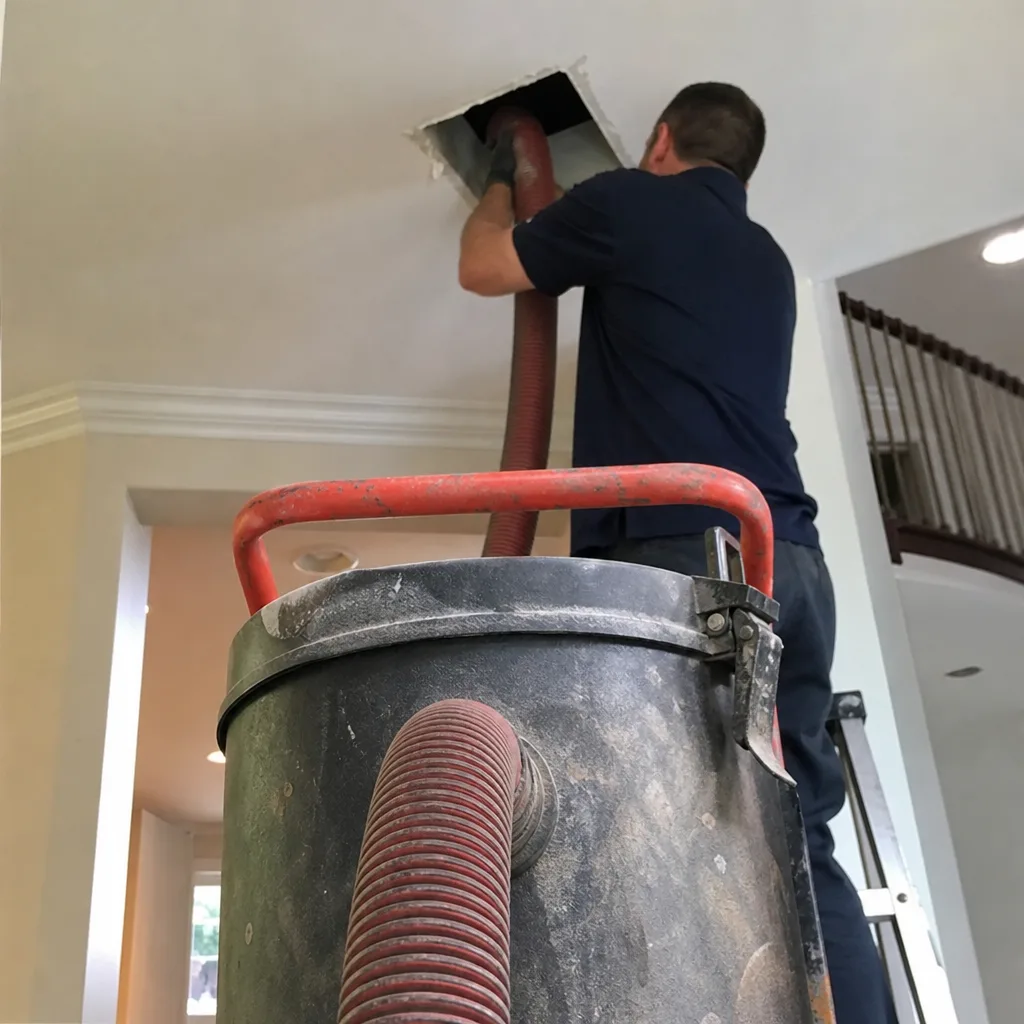
When you do schedule, ask for a full-system scope – ducts, air handler, blower, and coils – not a ducts-only visit. Clean ducts with a dirty air handler send the debris straight back into the ductwork within a season. We use Rotobrush and Nikro commercial-grade systems for this reason – they’re the same tools commercial contractors use, not consumer shop vacs – and we scope the whole system rather than just the reachable duct run.
Choosing the Right MERV Rating for RSM Air
MERV – Minimum Efficiency Reporting Value – is the number on the filter box. Higher captures more particles, but higher isn’t automatically better. Choose too high a MERV and the filter restricts airflow, forces the blower to work harder, and can shorten the life of the equipment. Choose too low and it doesn’t trap the fine particles that cause the musty smell and visible dust problems most people are trying to solve.
How to choose for a Rancho Santa Margarita home
RSM sits in a warm, dry inland Southern California climate with a long cooling season but mild winters. That means the system runs more hours per year on the cooling side, and pollen and dust load is a bigger factor than heating-side combustion byproducts. A reasonable starting range for most homes here:
- MERV 8: the safe baseline. Low restriction, catches larger dust and pollen. Fine if no one in the home has allergies.
- MERV 11: the sweet spot for most homes here. Traps fine dust, mold spores, and much of the pollen that drives spring and fall allergy complaints in the community, without leaning on the blower.
- MERV 13: for allergy or asthma households, and only if your system’s spec sheet supports it. Residential systems built before roughly 2010 often can’t move enough air through a MERV 13 without strain. Check the equipment label before upgrading.
A quick calibration for our seasonal swings
Air quality in the Santa Margarita area tracks with weather. Spring brings pollen from the surrounding hills and open space. Late summer and fall bring the Santa Ana wind pattern, which drives dry dust and wildfire smoke into the area. That pattern suggests a yearly rhythm: run MERV 11 through spring for pollen, switch to a fresh MERV 11 or supported MERV 13 right before fire season, and check the filter more often than usual during smoke events. If you find yourself replacing filters more than once a month in a heavy smoke stretch, the filter is doing its job – you’re just asking it to do more.
If you want to pair filtration with whole-home air quality work, Honeywell and Aprilaire filtration systems integrate with most residential HVAC setups, and both are part of what we can coordinate during a cleaning or repair visit. The trick is matching filter resistance to your blower’s actual airflow, which is why we measure before recommending an upgrade.
Dryer Vent Maintenance: The Most Skipped Task
If there’s one item on this checklist that almost every homeowner skips, it’s the dryer vent. It’s out of sight, out of mind, and it doesn’t announce itself with a dirty filter. It’s also the only part of the system with a recognized fire-safety role – NFPA guidelines treat dryer vent cleaning as a fire-prevention measure, not a housekeeping one.
The quarterly dryer vent checkpoints
- Lint trap clean. Pull it before every load. This is the easy one, and most people do it. It isn’t enough.
- Dryer run time test. Time a normal load periodically. If a load that used to finish in 45 minutes now takes an hour and fifteen, the vent is restricted. That’s a fail – schedule cleaning.
- Exterior vent flap check. Go outside while the dryer is running. The exterior flap should open fully with strong airflow. A half-open flap, or one that won’t open on its own, is a clear signal.
- Damp clothing check. Clothes that come out warm and damp at the end of a full cycle, when they used to come out dry, is the same signal as a slow run time.
- Transition duct inspection. Look behind the dryer at the flexible duct. It should be smooth inside, not the ribbed foil type, and it should be as short and straight as possible. Long, crushed, or ribbed transitions trap lint.
The annual professional dryer vent inspection and cleaning should be part of the same visit as your duct cleaning. We handle dryer vent cleaning as a dedicated service because it’s that important, and running it on the same schedule as the rest of the system keeps you from forgetting it. A dryer vent that hasn’t been professionally cleaned in five years is common in Rancho Santa Margarita homes – and it’s also one of the easiest risks to remove.
Integration with the main checklist
Don’t treat the dryer vent as a separate plan. It belongs on the quarterly cycle with the duct inspection, and on the annual cycle with the full-system review. Homeowners who fold it into the duct checklist clean it more often, and clean it consistently, than those who try to track it on its own.
What to Document After Every Cleaning
The single most underrated part of duct maintenance is the file. What you write down – and what a professional provides – is the paper trail that separates a well-maintained system from a mystery. It’s also the file that protects your position at resale, which we’ll get to next.
What a professional cleaning should hand you
- Before-and-after photos of your ducts. Not stock photos, not generic examples: photos of the actual runs in your home. Ask to see them. If a company can’t produce them, that tells you something.
- Airflow readings taken at supply registers before and after the work, when the equipment is available. Numbers give you a baseline for the next visit.
- Technician notes on any damaged flex runs, disconnected joints, or restricted returns found during cleaning. Even if those aren’t fixed on the same visit, they need to be written down.
- Filter size and MERV rating recorded, so future replacements match the system.
- Date and scope of work. What was cleaned, what was sanitized, what was sealed.
What you should write down yourself
- Filter replacements, with dates and MERV rating. A one-line note in your phone notes app is enough.
- Any checkpoint you logged as a “note” on a monthly or quarterly cycle, and when you first noticed it.
- Dryer vent cleaning dates, whether professional or a self-check of the exterior flap.
- Any repair work – duct sealing, joint re-taping, plenum repair – with a photo if you took one.
This file isn’t a formality. When something starts to smell or airflow drops, the file tells you when the problem started, which usually tells you why. That’s the difference between a targeted repair and a fishing expedition.
Building a Record That Helps at Resale
When you sell a home in Rancho Santa Margarita, you’ll hand the buyer a seller’s disclosure and whatever maintenance records you’ve kept. A duct cleaning and repair history is one of the cheapest forms of diligence you can provide, and one of the easiest for a buyer’s inspector to challenge if it’s missing.
Why it matters more here than in many markets
The RSM housing stock includes a substantial share of homes built in the 1980s and 1990s, and many have flex ductwork that has aged through several HVAC replacement cycles. Buyers and their agents increasingly ask for records on filter history, professional cleaning dates, and any duct sealing work. A buyer who sees a clean, dated file with photos and airflow numbers is less likely to discount for “unknown maintenance history” or ask for a credit at closing.
What the file should include at resale
- The last two professional cleaning reports, with photos and scope of work.
- Any duct repair or sealing invoices and before/after photos.
- A one-page summary of the annual schedule you followed, with dates.
- Filter MERV history and current filter size.
- Dryer vent cleaning dates and any signed professional records.
None of this requires special effort if you’re already running the checklist. The file is a byproduct. If you’re already cleaning on schedule, you’re already most of the way to a credible resale file. If you aren’t, the annual professional review is where to start. A free estimate and a written scope is the entry point: call (877) 792-5932.
Adjusting the Checklist Through the Year
The three cycles – monthly, quarterly, annual – are the backbone. Over the top of that, the checklist shifts with the Southern California seasons. Here’s how to flex it without creating a whole new plan.
Spring
Pollen load is highest as the surrounding open space blooms. Watch return grilles for visible pollen accumulation, keep the filter on MERV 11, and expect to replace filters more often during peak weeks. If anyone in the home has seasonal allergies, this is the season to book the annual cleaning if you’re on a two-to-three-year cadence.
Summer
The system runs hardest here, and our long cooling season means the blower is moving air most of the day. Check filters more frequently than the monthly baseline – every four weeks is realistic in July and August – and watch airflow at supply registers for any that drop off. Weak airflow in one room, in mid-summer, is usually a duct-side issue, not an equipment one.
Fall
Santa Ana winds bring dry dust and wildfire smoke into the area. Switch filters right at the start of fire season, check return grilles for soot staining, and keep windows closed during smoke events. This is also the season when a “musty” smell inside the return is most likely to surface, because the system is pulling more air past filter that has already loaded up. If the smell appears in the fall, book cleaning rather than waiting for the annual cycle.
Winter
Mild, so heating load is light. Winter is the easiest season to schedule a professional cleaning, dryer vent service, or duct sealing work – the system is idle enough that a half-day service call doesn’t leave the house uncomfortable. If you’re planning a sealing or repair, winter is when we do most of ours. Schedule through the year: we answer 24/7 and fast dispatch runs from 7am to 7pm, Sunday through Friday.
Common Mistakes to Avoid
- Cleaning only the ducts and not the air handler. Dust returns from a dirty blower and coil within a season. Whole-system cleaning is one job, not two.
- Choosing a MERV rating that’s too high. A MERV 13 filter on a system that can’t move the air is a slow restriction problem, not an upgrade. Match the filter to your equipment, not to the heaviest marketing claim on the box.
- Skipping the dryer vent. It’s the most-skipped and the only item on this checklist with a recognized fire-safety role. Fold it into the duct schedule so it actually happens.
- Not documenting anything. A cleaning without photos, dates and airflow numbers is a memory, not a record. Ask for the file, and keep your own.
- Ignoring small flex tears. A torn flex jacket is a slow air-quality problem and a slow energy-loss problem at the same time. Small repair work now avoids a larger sealing job later.
- Replacing the filter from memory. Filter sizes vary by air handler, and a filter that doesn’t seat properly bypasses unfiltered air. Read the label, not what you remember.
- Assuming monthly is overkill. In a heavy-use cooling climate like Rancho Santa Margarita, monthly checks catch problems before they become quarterly or annual repairs.
See the difference
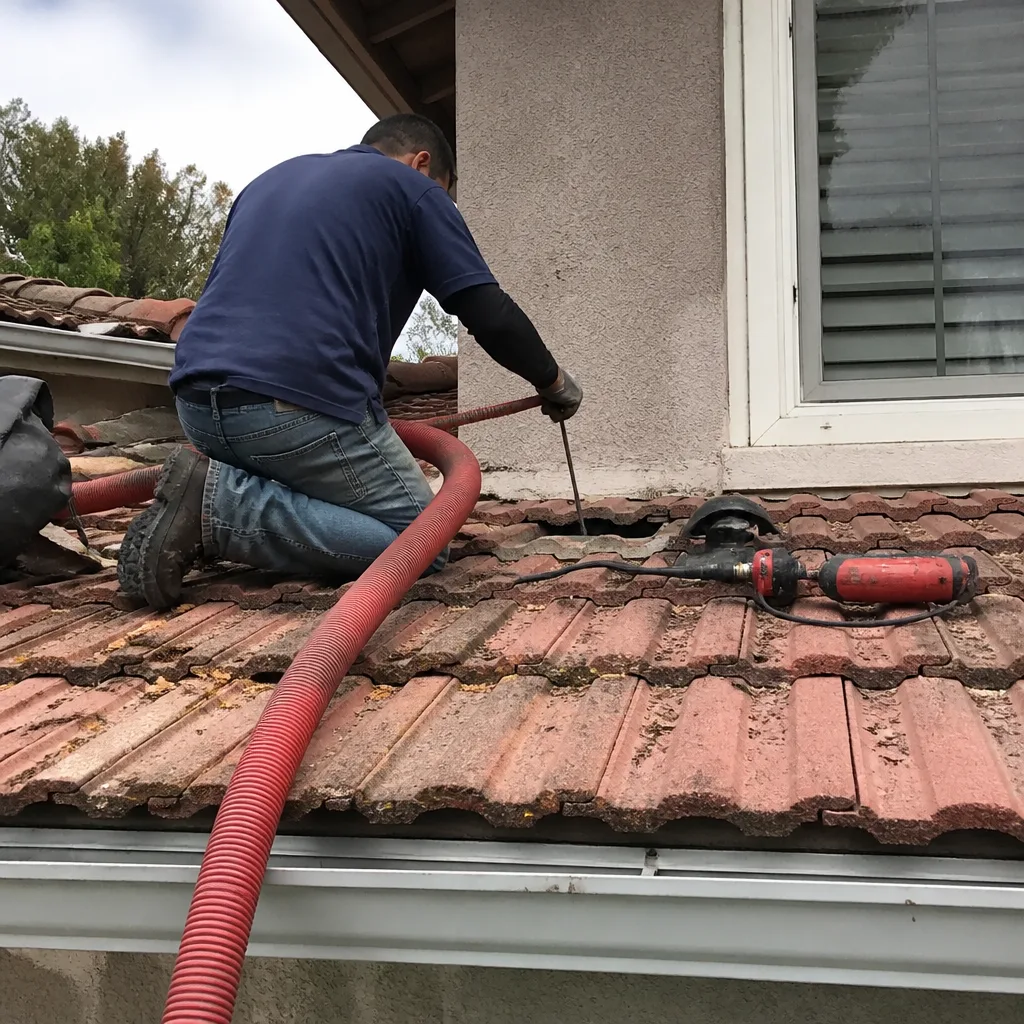 Before
 After
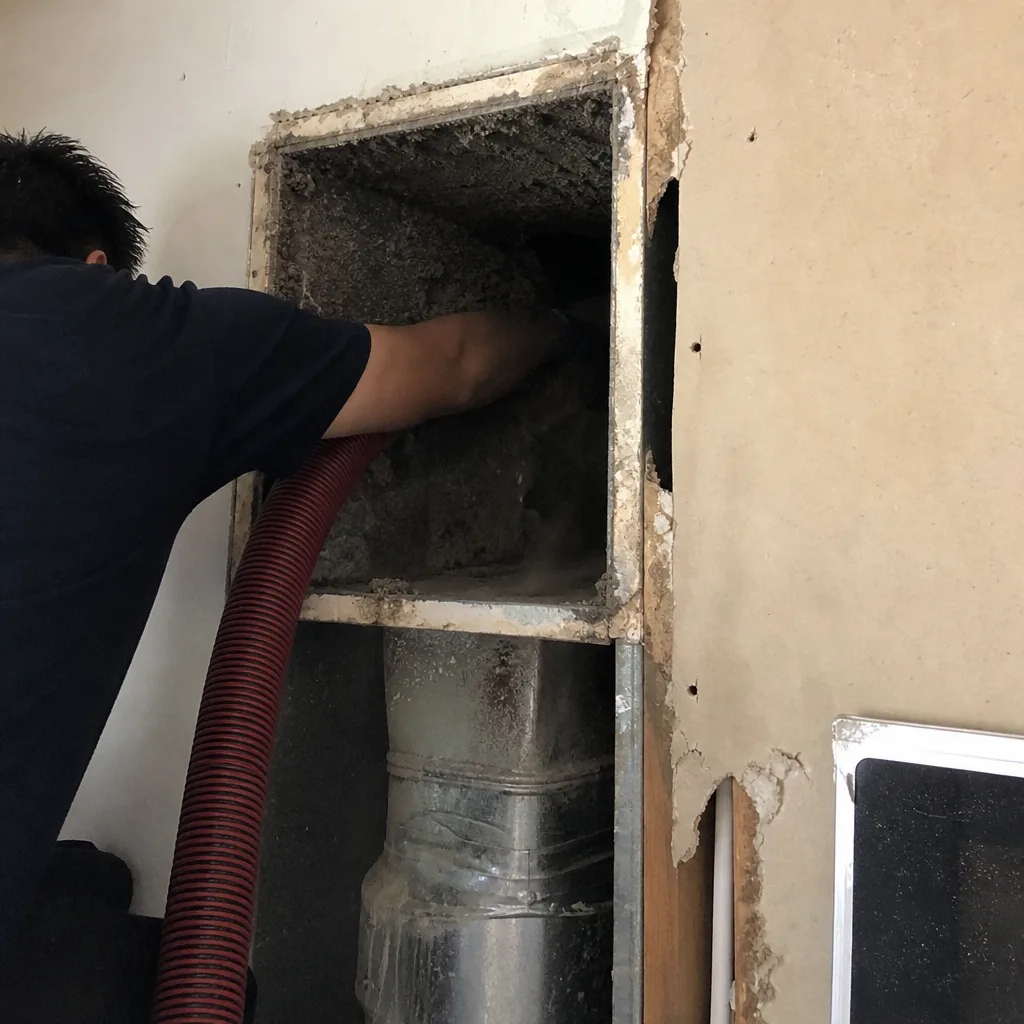 Before
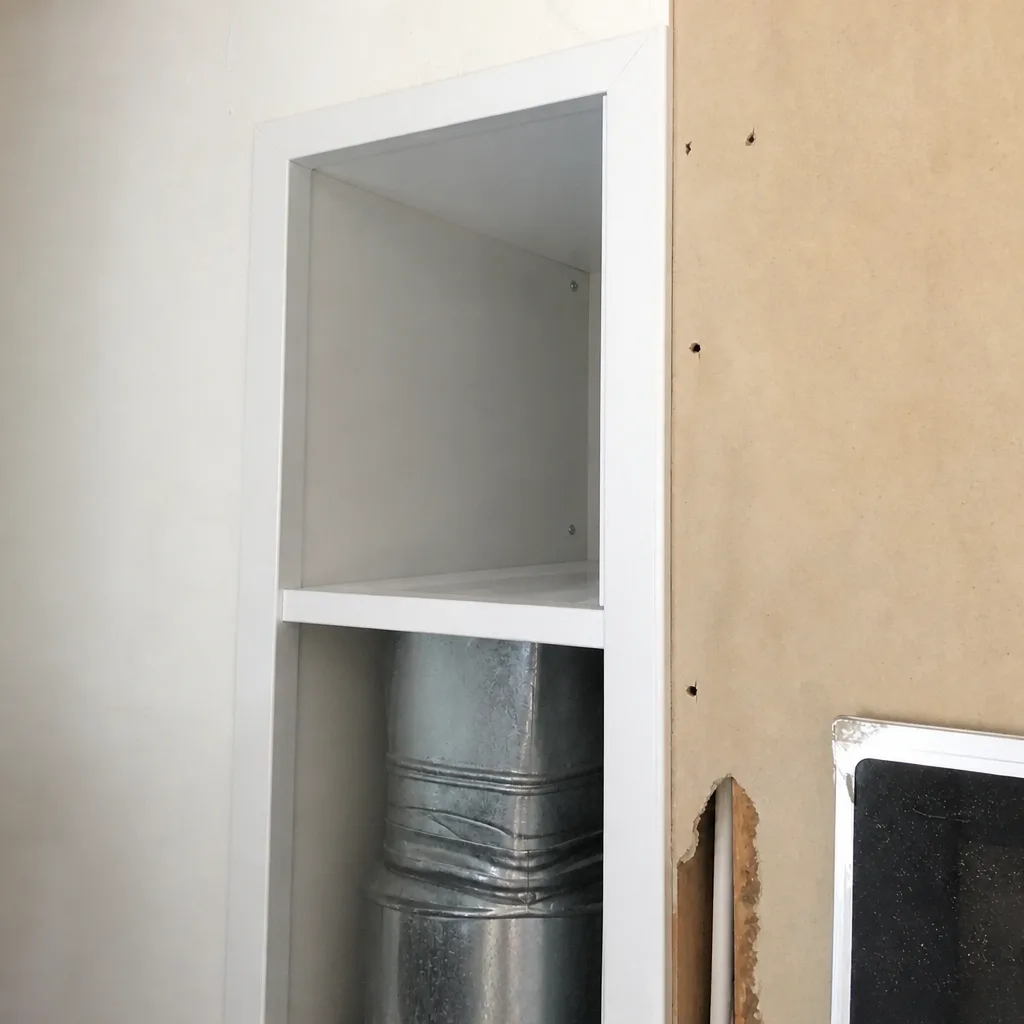 After
 Before
 After
When to Call a Professional
Some checkpoints you can handle yourself. Others you shouldn’t. Call a professional when you find a torn or disconnected flex run, standing water near the air handler, a musty or stale smell inside a return that doesn’t clear after a filter change, a dryer vent that won’t open fully at the exterior flap, or airflow drops at two or more registers that persist through a filter change. Book a professional review when you haven’t had the system cleaned in more than three to five years, when the last cleaning didn’t include the air handler, or when a duct repair has been noted but not addressed. Rancho Santa Margarita Air Duct Cleaning Pros offers free estimates in Rancho Santa Margarita – call (877) 792-5932. We answer 24/7, and fast dispatch runs from 7am to 7pm, Sunday through Friday.
Frequently Asked Questions
Most homes need professional cleaning every three to five years, but homes with multiple pets, recent remodeling, or allergy-prone residents should clean closer to every two to three years. If you maintain monthly filters and quarterly inspections, the visual condition of your ductwork will tell you when to book, and the professional review will confirm it.
Typical estimates for a full-system cleaning in the Rancho Santa Margarita market run in the range of $300 to $600 for a standard single-family home, with dryer vent service as a small add-on and duct sealing quoted separately. The price is set per job by a written estimate after the system is inspected, and we don’t quote per-vent prices or teaser figures. Call (877) 792-5932 for a free estimate.
Low advertised prices usually cover only the reachable supply ductwork and skip the air handler, blower, coils, and return plenum, which means debris stays in the system and recontaminates what was cleaned. A written estimate that spells out the scope, the equipment, and the post-work documentation is the honest comparison. If a quote doesn’t list the air handler, it isn’t a full-system cleaning.
Ask for before-and-after photos of your own ducts, plus a summary of what was cleaned and any issues found. A professional visit should also flag any flex tears, disconnected joints, or restricted returns, and give you the airflow readings when equipment is available. If a company won’t show you photos of your home, don’t hire them.
Yes, for the accessible sections. With the system off, you can look at duct runs through grilles and panels, check flex connections by feeling for tightness, and inspect the return plenum near the air handler with a small trouble light. Anything you can’t see, or any suspected damage, is a professional inspection. Never cut into ductwork to see further.
Professionally, once a year for most households, and more often if you do multiple loads per day or have a long vent run. At home, check the exterior flap and load run-time every quarter as part of the duct checklist. If the flap won’t open fully or a normal load takes noticeably longer than usual, book cleaning now rather than at the annual mark.
The Bottom Line
A duct maintenance checklist is only useful when it’s built around things you can actually observe, measure and record. The three-cycle schedule – monthly filters and returns, quarterly duct and dryer vent inspections, annual full-system review – is the structure. The pass/fail criteria at each step are what make it a plan rather than a reminder. Document everything, keep the file current, and it becomes a real asset at resale. When the checklist flags a repair or a cleaning, do the whole system, not just the ducts, and use the same commercial-grade equipment a professional contractor would. That’s the standard we hold to at Rancho Santa Margarita Air Duct Cleaning Pros, where our technicians have up to 15 years of experience and we treat cleaning, repair, sealing and sanitizing as one job.
Call (877) 792-5932 for a free estimate. We answer 24/7. Fast dispatch from 7am to 7pm, Sunday through Friday.
Written by the team at Rancho Santa Margarita Air Duct Cleaning Pros.